
Analyzing the intersection of kinetics, industrial art, and consumer demand in modern retail markets.
In the contemporary toy and collectible landscape, the segment of 3D mechanical gear puzzles has transitioned from a niche hobbyist subculture into a multi-million-dollar global market. Drivers behind this growth reside in a structural shift in consumer behavior: the pursuit of analog, tactile engagement to offset screen fatigue, combined with the rising prestige of STEM and STEAM (Science, Technology, Engineering, Arts, and Mathematics) educational values. These parameters have positioned mechanical assemblies as premium giftware and intellectually stimulating collectibles.
For global distributors, brand owners, and procurement officers, the commercial viability of mechanical gear puzzles depends on understanding the manufacturing complexities that define consumer satisfaction. Puzzles that incorporate working gear trains, escapements, pendulums, and wind-up motors command significantly higher retail prices and margins than static woodcrafts. However, this relies on structural tolerances, material consistency, and smooth kinetic operations.
Unifying state-of-the-art engineering, vertical material supply, and rigorous regulatory testing frameworks.
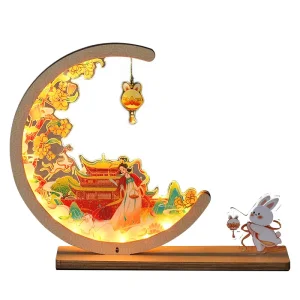
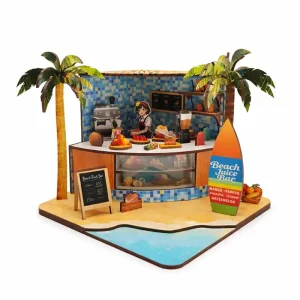
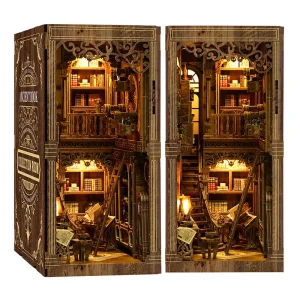
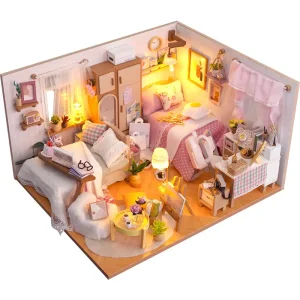
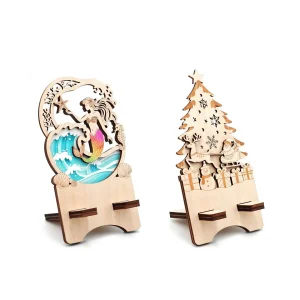
LINYI WOODEN TOYS LIMITED COMPANY is a professional OEM/ODM manufacturer specializing in wooden DIY kits, 3D wooden puzzles, miniature house kits with LED lights, book nook kits, wooden educational toys, Montessori toys, and custom wooden craft products. We provide one-stop services from product concept development, structural design, laser cutting, laser engraving, UV printing, assembly testing, and instruction manual design to custom packaging and bulk production.
Our operational infrastructure is optimized for toy brands, gift retailers, hobby shops, museum stores, e-commerce sellers, and private label buyers. Our core manufacturing raw materials include basswood, poplar, and MDF.
Recognizing the volatility of global consumer demands, we provide robust support for custom themes, logos, color treatments, packaging styles, complex physical structures, and dedicated OEM/ODM development. Our standard MOQ is low, starting at 200 pcs, enabling rapid product testing and market feedback collection.
We maintain compliance protocols ensuring access to European, American, and Asian markets. FSC material options are readily available to satisfy green initiatives and corporate sustainability policies.
Depending on targeted destination countries and unique customer specifications, we systematically coordinate and facilitate product safety evaluations, including:
Explaining precision mechanics, gear tooth profiles, and what lies ahead in the assembly market.
Wooden components are intrinsically hygroscopic. Without specific manufacturing treatments, variations in relative humidity lead to warppage and swelling, causing mechanical gear jams. We resolve this by strictly monitoring the moisture content of our raw basswood plies, maintaining a dry-kiln standard between 8% to 12%. Plywood cross-grain layering mitigates directional expansion, ensuring that the gears retain flat profiles in dry continental or humid coastal zones.
Every laser beam has a physical focal width (kerf), which burns away approximately 0.05mm to 0.1mm of wood material on the cut line. If uncorrected, this kerf introduces excessive backlash into gear teeth, resulting in mechanical slips and energy losses. Our engineering team utilizes advanced CNC design software to pre-calculate kerf compensation. This guarantees tight friction fits for shafts and smooth mesh geometries for gear teeth without requiring glue.
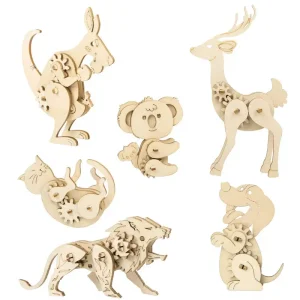
To achieve autonomous motion, modern mechanical puzzles rely on heavy-duty steel springs, gravity weights, or rubber bands. Transferring this raw potential energy through a wooden gear train demands high efficiency. We implement custom tooth profile modifications (specifically, cycloidal and involute profiles adapted for wooden matrices) and integrate low-friction paraffin wax blocks in our kits. This reduces the coefficient of friction, extending mechanical runtime by up to 150%.
The future of mechanical puzzles combines traditional woodcraft with digital technologies. Our next-generation product roadmap includes integrating low-voltage, sound-activated LED illumination, Bluetooth audio modules, and solar panel matrices. This transition bridges the gap between passive assembly models and smart home decorations, opening new market pathways in the smart gift and consumer electronic accessory sectors.
How regional concentration and upstream resource control create value for global volume buyers.
Linyi is widely recognized as one of the largest wood processing clusters in Asia. This physical proximity to veneer production facilities, specialized glue factories, and rotary slicing mills gives our factory instant access to premium grade poplars and basswoods. Raw material sourcing lead times are measured in hours, not weeks, protecting our manufacturing schedules from domestic resource bottlenecks.
In addition to raw wood processing, our local infrastructure is supported by packaging, logistics, and tooling manufacturers. Specialized printing factories for packaging boxes, custom metal spring suppliers, electronic component shops for LED kits, and export agents are located within a 50km radius. This geographic configuration minimizes secondary transportation costs and shortens our prototyping cycles down to 3 to 5 business days.
For international procurement teams, this cluster translates directly to minimized risk and optimized pricing. It allows us to manage manufacturing operations with high reliability, ensuring that large-volume seasonal orders for Black Friday, Christmas, and back-to-school periods are completed on schedule, regardless of unexpected global supply chain disruptions.
Customizing design features and marketing angles to meet localized cultural, commercial, and geographical preferences.
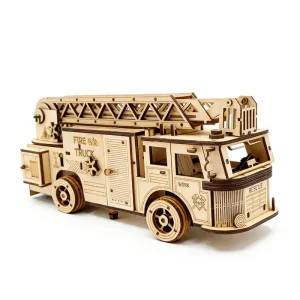
In mature Western markets, consumers prioritize materials and educational values. Mechanical gear kits are widely marketed as hands-on alternatives to screen time. Products destined for these regions must place FSC-certified wood and non-toxic, plastic-free raw materials at the forefront. Popular themes include retro automotive engineering models, planetary orrery setups, and vintage clocks.
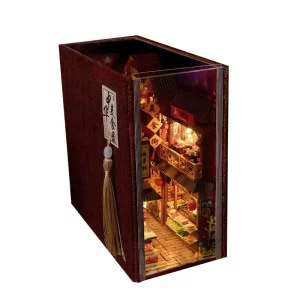
Due to dense urban living spaces, consumers in markets like Japan, South Korea, and metropolitan China favor compact form factors. This preference has driven the demand for integrated LED Book Nooks that fit on standard bookshelves. Incorporating regional cultural themes (such as traditional architecture, historical alleyways, and mythological themes) increases local relevance and retail velocity.
Corporate clients utilize custom wooden mechanical kits as tools for executive training, team-building events, and year-end customer gifts. Additionally, these puzzles are finding a role in senior care facilities and wellness centers. The focus on tactile coordination and logic puzzles helps sustain fine motor skills and spatial reasoning, positioning mechanical puzzles as tools for cognitive rehabilitation and stress management.
Addressing core questions regarding customization capabilities, production times, supply logistics, and safety testing protocols.

 CraftODM