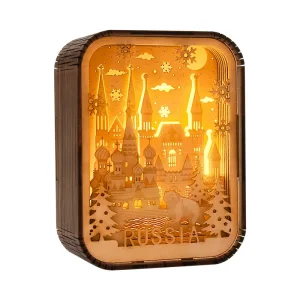
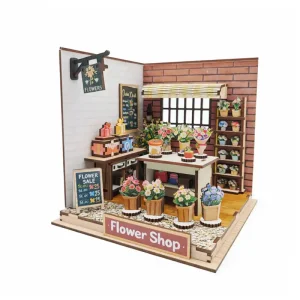
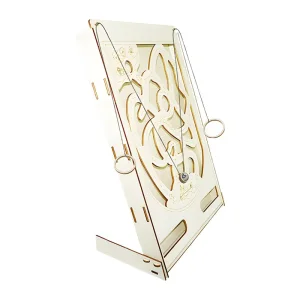
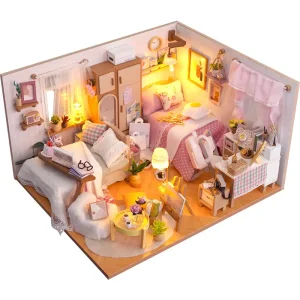
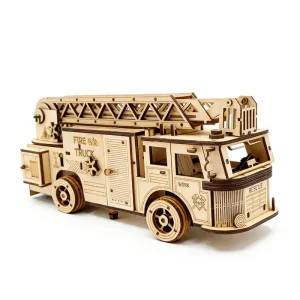
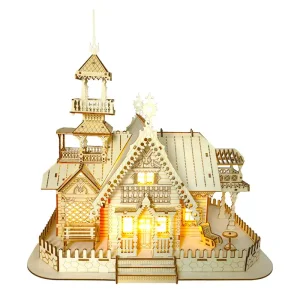
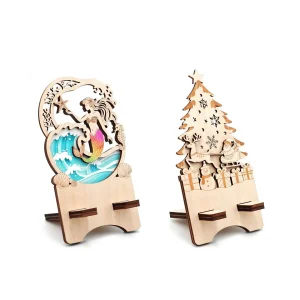
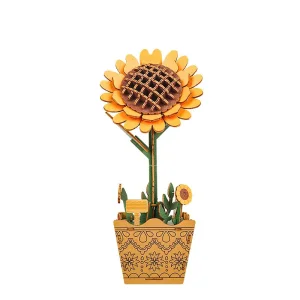
Explore our premier collection of customized wooden crafts, lighted miniature architectures, and educational models engineered to the highest industry standards.
Understanding the global structural shift toward premiumized wooden educational toys and eco-friendly mechanical assemblies.
In the contemporary consumer landscape, the intersection of hands-on hobbyism, aesthetic home decor, and structural learning has catalyzed an unprecedented demand for premium wooden puzzles and DIY miniature house kits. This structural transformation within the global toy and gift market represents a shift away from high-impact plastic toys toward natural, durable, and highly customizable structural assemblies. As consumer behavior trends favor screen-free engagement, corporate entities and retailers are leveraging personalized wooden puzzle systems to build profound brand equity.
The global market for 3D wooden puzzles and wooden educational toys has evolved beyond simple children's blocks. Today, products like intricate book nooks with integrated LED circuitry, laser-cut historical architectural models, and complex mechanical gearbox assemblies represent a multi-billion dollar category. These items serve not only as therapeutic activities for adults but also as advanced pedagogical systems aligning with STEAM (Science, Technology, Engineering, Arts, and Mathematics) education models worldwide.
"The modern consumer views personalization not merely as a decorative addition, but as a key benchmark of product value. For corporate clients, museum stores, and private label retailers, offering localized and brand-relevant architectural and structural wooden kits yields a significantly higher retention rate and customer lifetime value compared to standardized commoditized goods."
Furthermore, global environmental policies and the ESG (Environmental, Social, and Governance) framework have forced international importers to scrutinize supply chain sourcing. Wooden toy production now demands certified material origins and non-toxic processing methods. High-precision manufacturing houses must demonstrate alignment with global green supply networks to maintain shelf compliance in North America, Western Europe, and East Asia.
An engineering-grade breakdown of our specialized raw material handling, precision processing, and customized design workflow.
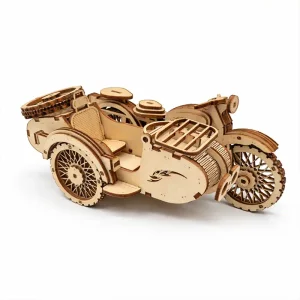
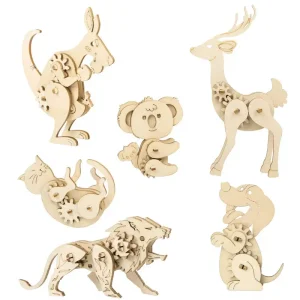
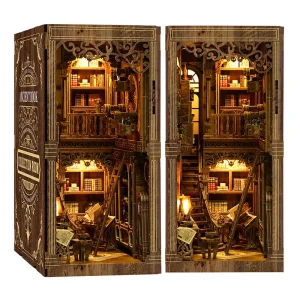
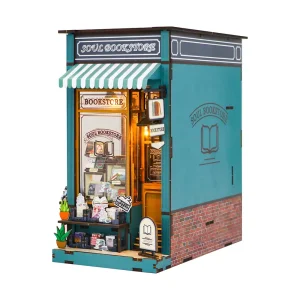
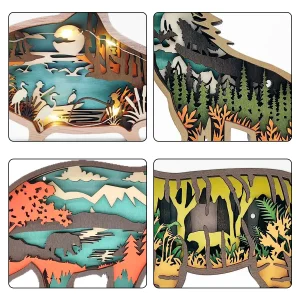
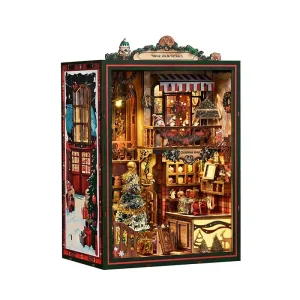
LINYI WOODEN TOYS LIMITED COMPANY stands at the forefront of this industrial sector as a professional OEM/ODM manufacturer specializing in wooden DIY kits, 3D wooden puzzles, miniature house kits with LED lights, book nook kits, wooden educational toys, Montessori toys, and custom wooden craft products. We operate a highly synchronized production facility capable of rendering complex structural concepts into commercial-ready products. Our operational workflow bridges initial material science and advanced woodworking machinery to serve global toy brands, gift retailers, specialty hobby shops, museum stores, e-commerce sellers, and private label buyers.
Our material selection process is governed by strictly defined mechanical benchmarks. For products requiring fine surface painting or multi-color UV flatbed printing, poplars and high-refinement MDF boards are selected due to their uniform absorption rates. For complex interlocking puzzle pieces where high shear forces are applied during assembly, premium basswood is utilized. This attention to mechanical properties minimizes wood split risk, offering end consumers a smooth, frustration-free DIY assembly experience.
| Material / Metric | Primary Wood Types | Standard Processing Methods | Primary Application Fields | Environmental & Testing Conformity |
|---|---|---|---|---|
| Basswood | High-density Tilia americana | Laser Cutting, Engraving, Mechanical Polishing | Complex 3D Puzzles, Interlocking Gearboxes | FSC, REACH, EN71, RoHS Compliant |
| Poplar | Low-density Populus tremula | Laser Profiling, UV Printing, Custom Staining | Miniature Houses, Book Nooks, Playhouses | FSC, CE, EN71-3, RoHS Compliant |
| MDF (Premium) | Homogeneous Wood Fiber Composite | CNC Routing, High-Definition UV Printing | Tabletop Ornaments, Colored Educational Board Games | E0/CARB Phase 2 Formaldehyde Standards |
Navigating tariff regulations, international shipping layouts, and volume scalability for complex wooden assemblies.
Operating a global distribution brand in the hobbyist or educational toy space requires a supply chain partner capable of handling intricate regulatory differences. LINYI WOODEN TOYS LIMITED COMPANY supports businesses across North America, the European Union, Australia, and Asia through a robust logistics framework that minimizes import risks and customs delays. We understand the specific customs tariff classifications (HS Codes) for educational kits, wood crafts, and electric toys, allowing for accurate import filings.
Our packaging systems are engineered to resist moisture and compression forces during container transit. Wooden products are inherently anisotropic, meaning their moisture absorption varies depending on relative humidity. To prevent warping, splitting, or mold growth during long maritime voyages, our components are sealed in moisture-barrier shrink wraps and packaged inside heavy-duty corrugated cartons containing silica desiccant packets. This protective packaging protocol guarantees that our products arrive in pristine, retail-ready condition anywhere in the world.
We also facilitate structural designs optimized for flat-packing. A flat-packed box layout reduces total volume, dramatically lowering ocean and air freight costs per unit. This space-saving design is critical for e-commerce platforms like Amazon, Shopify, or local e-retail sites, where third-party fulfillment fees are determined by dimensional weight. Partnering with us allows brands to optimize their product form factors for maximum logistical yield.
Flat-packed product layouts minimize dimensional weight, reducing logistics overhead for FBA and direct-to-consumer distribution models.
Flexible production lines scale rapidly from initial test runs of 200 pieces to full-scale monthly runs exceeding 100,000 units.
Pre-verified custom documentation and compliant HS coding prevent warehouse holds and unexpected customs duties.
Maintaining consumer safety and market access through strict testing compliance, eco-certifications, and target audience alignment.
A key indicator of expertise, authoritativeness, and trustworthiness (E-E-A-T) in toy manufacturing is compliance verification. Toys and home decor products face strict regulatory oversight globally to prevent physical, chemical, and electrical hazards. LINYI WOODEN TOYS LIMITED COMPANY meets these requirements by offering complete testing support tailored to our clients' regional sales requirements.
For the North American market, our products comply with ASTM F963 (Standard Consumer Safety Specification for Toy Safety) and the Consumer Product Safety Improvement Act (CPSIA), which enforce strict limits on heavy metals and chemical phthalates in toy substrates. For the European Economic Area, our wooden items comply with the EN71 standards series (including mechanical properties, flammability, and chemical migration). When integrating electrical circuits, LED systems, or battery units into items like our Book Nook kits or lighted village models, we align production with EN IEC 62115 (safety standards for electric toys) and RoHS standards, protecting distributors from product liability issues.
Our commitment to sustainability is highlighted by our FSC (Forest Stewardship Council) material options. The FSC Chain of Custody certification tracks wood materials from responsibly managed forests to the final product packaging. This certification allows retail buyers to display certified eco-labels on their retail packaging, appealing to environmentally conscious consumers and meeting strict corporate sourcing policies.
A detailed breakdown of our design process, transforming client concepts into high-precision commercial wooden products.
Clients submit vector designs (DXF, AI, PDF) or raw sketches. Our engineers import these into 3D CAD modeling software to design matching interlocking tabs, calculating wood swelling allowances (typically 0.1mm depending on ambient humidity).
We produce physical wood samples to test slot tolerances. This step tests mechanical strength under different insertion forces, ensuring parts hold together securely without loose fits.
For colored models, we run test prints on our industrial flatbed UV printers. This step calibrates color accuracy directly on the wood grain, applying clear protective coatings to prevent scratching during shipping.
Once prototype testing is approved, we create production assembly templates. Mass manufacturing runs on CNC laser cutters with optical sensor controls. This real-time calibration maintains consistent beam power and focal length across different wood batches, preventing rough cut edges or wide kerfs that can affect assembly fit.
Our quality assurance workflow ends with final assembly validation. Before packing, sample kits from each production run are built by our QC team. This test checks the accuracy of the printed instruction manual, the fit of the parts, and the electrical connections of any LED modules, preventing consumer complaints and retail returns.
Answering critical technical, logistics, and design design questions for purchasing managers and brand owners.
Discover more of our high-precision custom products, including certified educational kits and seasonal decorative sets.
 CraftODM