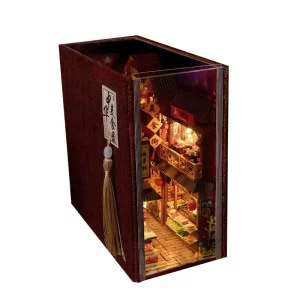
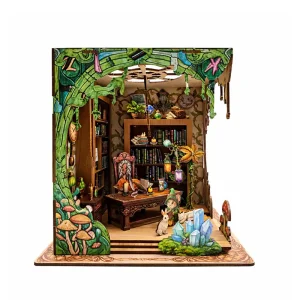
Precision-engineered DIY structures featuring advanced laser engraving, structural integrity, and retail-ready packaging design.
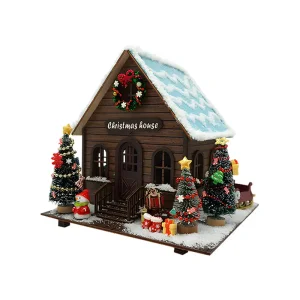
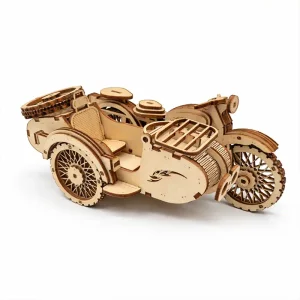
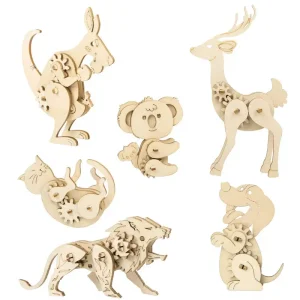
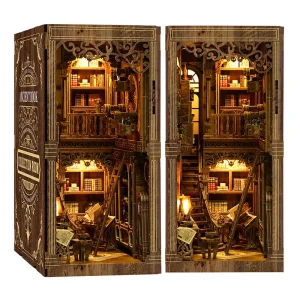
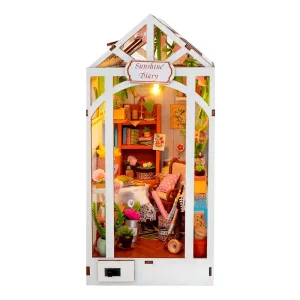
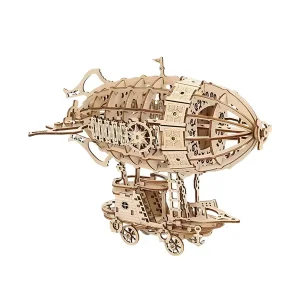
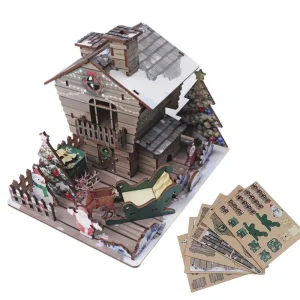
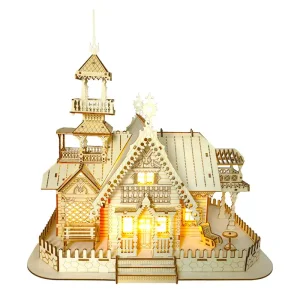
LINYI WOODEN TOYS LIMITED COMPANY is a highly integrated, specialized OEM/ODM manufacturer engineering next-generation educational toys and recreational kits. Our production infrastructure specializes in wooden DIY kits, high-complexity 3D wooden puzzles, structural book nook kits integrated with LED micro-circuitry, complex miniature house architectures, Montessori training materials, and custom commercial-grade wooden craft solutions.
We provide full lifecycle solutions from the formulation of geometric concepts and structural analysis, to high-precision laser routing, precision laser engraving, flatbed UV printing, structural load testing, digital assembly validation, step-by-step instruction manual drafting, and custom packaging construction designed to withstand complex international postal logistics. Our primary raw materials focus on structurally stable, sustainably harvested options: Basswood, Poplar, and Medium Density Fiberboard (MDF).
Our solutions cater directly to globally scaled toy brands, niche gift retailers, design-oriented hobby distributors, institutional museum gift shops, digital e-commerce chains, and private label importers seeking to establish distinct market products.
Modern global sourcing groups prioritize supply chains that balance manufacturing speed, structural compliance, and material cost optimization. As international retail compliance becomes more strict, brands must align with partners capable of managing supply lines from design files directly to custom shelf packaging. At Linyi Wooden Toys, our standard MOQ starts at 200 units, allowing brands to test product-market fit before committing capital to major production runs.
Laser Tolerance
Active Brand Partners
Eco-Friendly Wood
Flexible Low MOQ
Analyzing the ecosystem dynamics that drive down production costs while advancing structural engineering, precision tolerances, and sustainable materials.
We draw raw timber directly from local, sustainably-managed forests, optimizing material costs. Our facility brings CAD design, precision laser cutting, UV printing, and assembly testing together under one roof, reducing lead times and shipping costs.
Using advanced CNC CO2 laser systems allows us to achieve cutting tolerances under 0.05mm. This high precision is essential for glueless snap-fit designs, ensuring parts remain securely joined across various regional humidity levels.
Our processes are structured to meet strict global safety and environmental guidelines. From material selection to final testing, we provide FSC options and comply with CE, EN71, REACH, RoHS, and EN IEC 62115 regulations.
In high-precision 3D puzzles and DIY assemblies, material selection directly affects the assembly experience and structural durability. Basswood (Tilia americana) is a preferred material for complex laser-cut model kits. Its fine, uniform grain, low resin content, and resistance to warping prevent the excessive charring common with high-energy laser cuts. This results in clean edges and precise interlocking joints. Poplar is a lightweight alternative suitable for non-load-bearing internal structures and larger panels where weight is a factor. MDF (Medium-Density Fiberboard) offers high structural density, flat surfaces, and isotropic properties. It is often used for load-bearing gears, bases, and mechanical components that require consistent dimensions without the variations of natural wood grain.
We source these raw materials from suppliers certified under the Forest Stewardship Council (FSC). This helps ensure that the wood used in our production supports sustainable forestry, helping clients meet environmental compliance requirements in markets like the EU and North America.
The global consumer market has shifted from static display models toward interactive assembly kits. Modern consumers look for models that combine structural assembly with dynamic elements. Our production lines integrate mechanical gears, LED lighting systems, light sensors, and micro-motors directly into wooden assemblies.
Adding electronic components requires strict adherence to safety standards. In the European market, integrated electronics must comply with EN IEC 62115 (safety of electric toys) and RoHS (Restriction of Hazardous Substances). We manage this by utilizing pre-certified, low-voltage LED circuits and battery assemblies designed for safe home display. This technical integration allows brands to offer more engaging products while meeting international retail standards.
Securing a competitive edge in retail requires short development cycles. Our engineering team converts digital CAD illustrations into physical prototypes within 3 to 5 business days. This process begins with structural software analysis to identify stress points in snap-fit joints, adjusting tolerances for different material thicknesses.
Once the design is validated, we run nesting algorithms to maximize sheet utilization, reducing material waste. This efficiency lowers costs and shortens production times. For bulk orders, our automated laser routing systems and UV flatbed printing lines enable consistent, large-scale production, allowing us to maintain stable lead times during high-demand seasonal periods.
Aligning product designs with international standards, regional distribution models, and specific market use cases.
Sourcing products for international markets requires meeting specific chemical and safety standards. Toy safety standards, including EN71 in the EU and ASTM F963 in the United States, impose limits on soluble heavy metals and chemical emissions in consumer products.
Our raw materials undergo regular testing for formaldehyde emissions, keeping them compliant with CARB Phase 2 and EPA TSCA Title VI standards. Our UV inks are also formulated to be VOC-compliant, ensuring that printed designs remain safe for handling. By keeping all materials and processes compliant, we help our clients avoid custom delays and safety recalls.
For electronic components, such as LED modules in book nooks, we run safety tests to prevent overheating and circuit failures, providing a safe assembly experience for end consumers.
Custom laser-cut model kits serve several market segments, each with specific design and material requirements:
Technical and logistical insights for B2B procurement managers and design teams.
Our design process moves from concept to prototype in 3 to 5 business days. Once the client approves the prototype and design files, typical production run times range from 15 to 25 days, depending on order size and packaging complexity.
Wood naturally expands and contracts with changes in humidity. We design our joints with tolerances between 0.03mm and 0.05mm and test models under simulated dry and humid conditions. This helps ensure that snap-fit joints assemble smoothly and hold together securely in different climates.
We use high-resolution industrial UV flatbed printers that cure the ink instantly using ultraviolet light. This bonding process creates a scratch-resistant, fade-resistant surface that passes standard adhesion and toy safety tests (EN71/ASTM).
Yes. We can source wood from FSC-certified forests, providing full chain-of-custody documentation. This helps our clients meet regulatory and sustainability requirements in markets like the EU and North America.
We design flat-pack packaging to reduce shipping volume and protect internal sheets. Our drop-test standards help minimize damage during transit, lowering return rates for e-commerce retailers and direct-to-consumer brands.
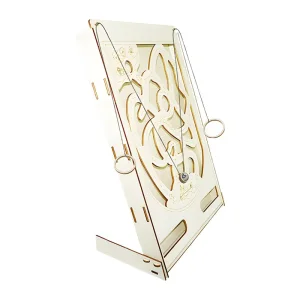
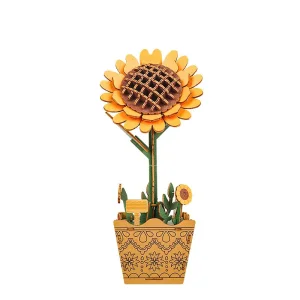
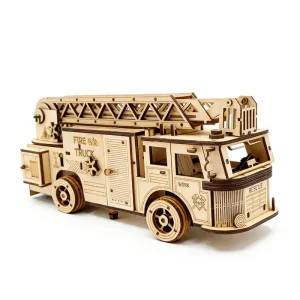
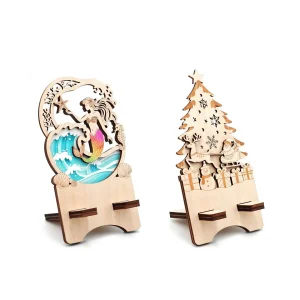
Explore our range of mechanical puzzles, interactive tabletop games, and custom decorative assemblies.
 CraftODM