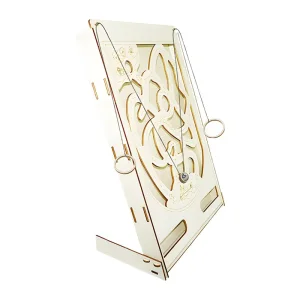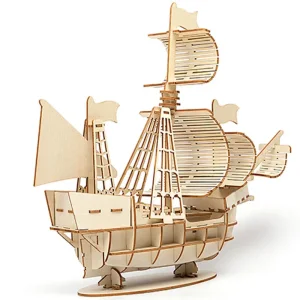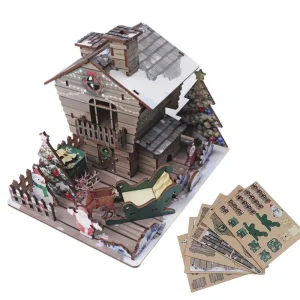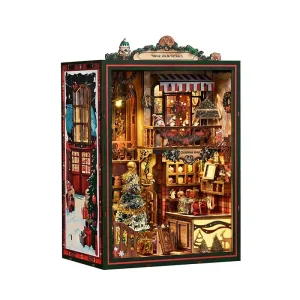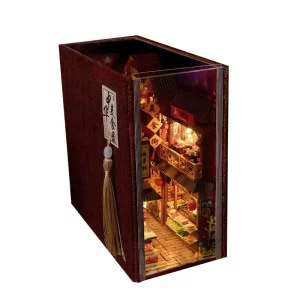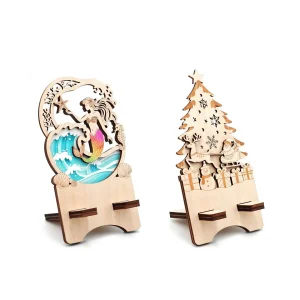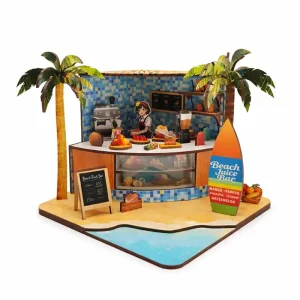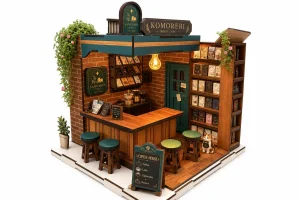
The global wooden toy and hobbyist assembly sector has experienced a profound structural paradigm shift. Once categorized strictly as simple children’s playthings, high-fidelity mechanical wooden structures—specifically iconic representations such as the Wooden Guitar Puzzle, book nooks, and intricate architectural miniature houses—have evolved into highly sought-after lifestyle products, therapeutic tools, and corporate collectibles. Powered by the rise of precision laser-cutting technology and the systemic integration of the STEM/STEAM educational pedagogy, the global market for adult 3D puzzles is currently projecting an accelerated CAGR exceeding 8.4% over the next decade.
This surge is largely driven by a demographic that values tactile engagement as a digital detox solution. Mechanical instrument models, particularly classical and electric wooden guitars featuring moving gear mechanisms and internal gearboxes, offer a sophisticated physical assembling experience. For global retailers, educational distributors, and private label importers, capitalizing on this consumer trend requires aligning with manufacturing entities capable of delivering structural integrity, precise fit tolerances, and comprehensive compliance standards like the CE Certification.
Unlike static models, mechanical wooden instruments operate on complex internal gear-trains, requiring wood with exceptional structural stability. In the manufacturing framework of Linyi Wooden Toys Limited Company, premium basswood and poplar are specifically selected to achieve the perfect balance between tensile strength and flexible cutability.
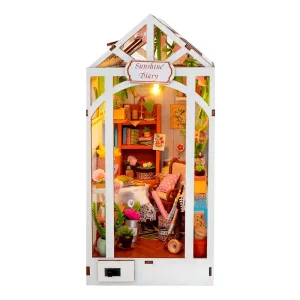
When importing 3D wooden puzzles or DIY miniature kits into the European Economic Area (EEA), regulatory compliance is not merely a legal checkbox but the foundational pillar of brand authority. Under the EU Toy Safety Directive (2009/48/EC), wooden models containing small mechanical elements or electronic parts (such as LED-lit miniature rooms or music boxes) must conform to stringent protocols.
A validated CE Mark indicates that the manufacturer has completed full technical documentation, verified compliance, and conducted rigorous conformity assessments. For B2B importers, buying non-compliant wooden craft components presents severe legal risks, including custom seizures and complete market recalls.
Utilizing certified premium Basswood, Poplar, and eco-friendly MDF. FSC certification options are readily available to meet global environmental regulations.
Operating cutting-edge laser cutting machines achieving tolerances within 0.05mm. This guarantees snug snap-fit joints requiring zero glue.
From initial CAD modeling and structure testing to professional assembly instruction design and customized packaging layout development.
The manufacturing of a high-performance CE Certified Wooden Guitar Puzzle relies on strict material physics and engineering. Standard plywood sheets vary in moisture content and structural density, meaning improper manufacturing processes can lead to warping, splintering, or high tolerances that make DIY assembly difficult.
| Material Type | Density & Stability | Laser Edge Finishes | Optimal Application |
|---|---|---|---|
| Basswood Plywood | High uniform density, minimal warping risk | Clean, pale edge; no heavy carbon residue | Precision structural gear components, intricate instrument parts |
| Poplar Plywood | Medium density, lightweight profile | Light brownish edge; highly flexible | Large outer structural frames, baseplates, decorative packaging |
| MDF (Medium Density Fiberboard) | Perfect uniformity; zero natural grain lines | Darker edge; highly defined engraving | Miniature house interior walls, base boards, painted elements |
During the laser-cutting production run, the heat generated by the laser beam creates a kerf (the width of the wood removed by the laser cut). To design a reliable friction-fit joint that connects securely without adhesive, the CAD structural drawing must calculate and offset this kerf precisely. By maintaining cutting tolerances within 0.05 mm, we guarantee that the wooden tabs slide into their corresponding slots with minimal force yet hold securely under mechanical stress.
Additionally, the moisture content of our raw wooden panels is strictly maintained within an 8% to 12% range. This prevents natural expansion and contraction during transit across different climate zones, ensuring that puzzles shipped from our factory in Linyi, China, arrive in perfect condition at warehouses in North America, Western Europe, or Asia.
Linyi Wooden Toys Limited Company supports global B2B clients through a comprehensive OEM/ODM supply chain. For toy developers, retail brands, and museum gift shops, we simplify custom development with our structured, one-stop process:

 CraftODM