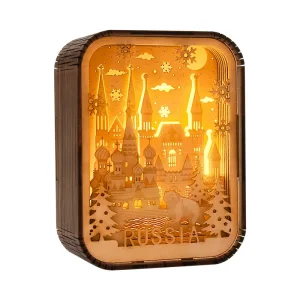
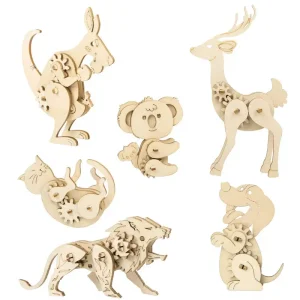
Explore our flagship range of CE-certified, laser-cut wooden puzzle projects engineered for international distribution channels.
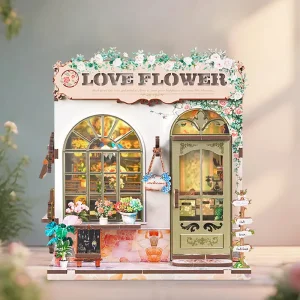
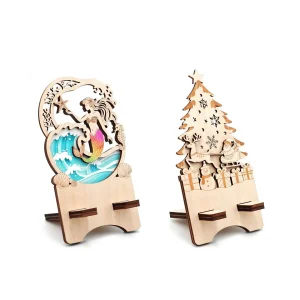
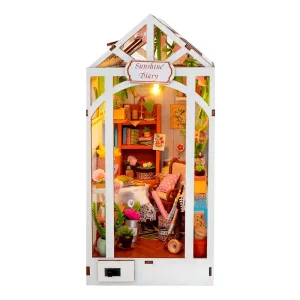
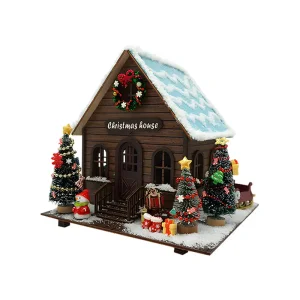
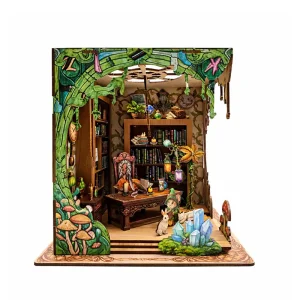
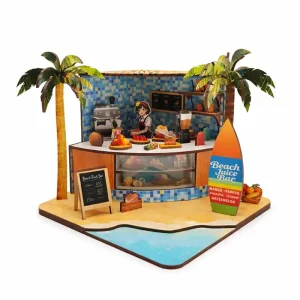
Analyzing the macro-economic forces, market demand parameters, and structural growth of the 3D wooden model sector.
The global market for 3D wooden puzzles, mechanical model kits, and miniature assembly structures has transitioned from a niche hobby sector into a multi-billion dollar mainstream segment of the global toy, gift, and educational markets. Fuelled by the structural rise of the STEAM (Science, Technology, Engineering, Arts, and Mathematics) educational framework, alongside an accelerating consumer preference for tactile, off-screen entertainment, premium wooden build models represent a high-margin opportunity for retailers and brand owners globally.
Historically driven by European and North American consumer bases with a deep affinity for craftsmanship and physical puzzles, the current demand curve has broadened significantly. Dynamic markets in the Asia-Pacific region, Latin America, and the Middle East are experiencing rapid adoption rates. According to industry intelligence reports, the toy puzzle and miniature model segment is projected to maintain a Compound Annual Growth Rate (CAGR) of over 8.2% through 2030. This growth is predominantly driven by two distinct B2C demographic archetypes: adult hobbyists seeking complex mechanical assemblies (such as perpetual motion calendars, gear-driven clocks, and architectural replicas) and parents searching for screen-free, brain-stimulating interactive play structures for children.
"For corporate buyers, importers, and private label owners, sourcing safe, compliant, and structurally sound wooden kits is no longer just about cost—it is about securing reliable structural engineering, sustainable materials, and rigorous certification credentials that mitigate supply-chain risks."
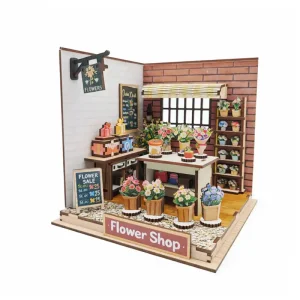
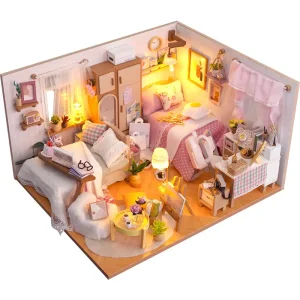
Furthermore, post-pandemic consumer psychology has driven a profound focus on mental wellness and "mindful assembly" hobbies. Miniature flower shops, book nooks, lighted cityscape dioramas, and eco-friendly animal model kits act as decorative elements for modern interior design, expanding their commercial footprint from toy retail chains to boutique lifestyle shops, museum bookstores, and home decor galleries.
How the industrial clusters of Linyi, Shandong, optimize the supply chain from raw sheet raw material to final boxed product.
As global procurement officers seek to optimize product unit costs without sacrificing craftsmanship, China’s industrial ecosystem remains the global benchmark for toy and model production. Central to this performance is LINYI WOODEN TOYS LIMITED COMPANY, located in Shandong Province—the epicentre of China's wood-processing and plywood manufacturing industries.
The efficiency advantages of Chinese wooden model production are built upon several key pillars:
This localized vertical integration ensures that international toy brands, e-commerce sellers, and private labels benefit from highly competitive ex-factory pricing, fast production turnarounds, and robust packaging designed to withstand the rigours of cross-border postal transits.
Delivering comprehensive engineering solutions from initial product concept design to global shipping dispatch.
Collaborating on 3D structure blueprints, interlocking tab engineering, and theme conceptualization to ensure optimal assembly user experience.
Creating physical prototypes using premium basswood or MDF. Tolerances are tested down to 0.05mm for a glue-free fit.
Applying high-resolution, non-toxic UV printing, slot routing, surface sanding, and optional hardware/LED light system integration.
Ensuring compliance with CE, EN71, and REACH standards. Arranging custom flat-pack box layouts, color inserts, and step-by-step manuals.
A comprehensive review of the safety regulations and verification protocols governing wooden consumer goods.
Compliance is the most critical element for B2B buyers importing wooden toys and DIY kits into North America, Japan, and the European Union. Inadvertently importing non-compliant products can lead to customs seizures, product recalls, substantial regulatory fines, and reputational damage.
The CE (Conformité Européenne) mark signifies that a product conforms to all relevant European safety directives. For wooden model kits, the product must satisfy the requirements of the Toy Safety Directive 2009/48/EC, commonly verified through the EN71 test suite:
The REACH regulation (EC 1907/2006) monitors Substances of Very High Concern (SVHCs). In wooden manufacturing, this regulates formaldehydes used in plywood adhesives and MDF sheets, ensuring emissions remain well below maximum exposure levels. Similarly, for models incorporating LED lights, circuits, or battery compartments (such as book nooks and miniature houses), compliance with the RoHS (Restriction of Hazardous Substances) Directive is required to restrict toxic electronic components.
When a wooden model is integrated with LED lighting, sensory sound sensors, or motorized units, it transitions into the category of electrical toys. Safety verification must therefore include EN IEC 62115, which assesses the safety of supply circuits, wires, heat generation, insulation, electromagnetic compatibility (EMC), and battery compartment accessibility.
LINYI WOODEN TOYS LIMITED COMPANY implements a strict multi-tier quality control regimen. We use raw sheets sourced from FSC-certified forests, screen adhesives for low formaldehyde output, and utilize non-toxic vegetable-based inks. This ensures that every bulk shipment is ready to pass rigorous testing and customs inspections in the target market.
Explore the strategic growth opportunities and market applications that drive high sales volumes in the wooden model sector.
Schools, STEM camps, and homeschooling organizations use physical 3D assembly kits to teach spatial relations, mechanical gears, basic physics, and hand-eye coordination.
Customized wooden puzzles of architectural landmarks, branded logos, or vehicles offer a memorable, tactile alternative to generic corporate gifts.
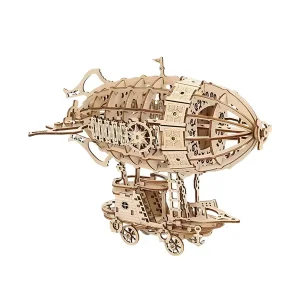
Curated gift shops use customized historical structures (e.g., vintage airships, ancient temples, classic vehicles) to increase per-visitor spending.
Get answers to key technical, logistical, and compliance questions regarding bulk wholesale orders from China.
Our standard Minimum Order Quantity (MOQ) for custom-engineered structural kits normally starts at 200 pieces per design. This enables us to configure laser-cutting patterns, set up UV printing plates, and produce custom retail packaging efficiently.
We source high-quality raw materials (such as basswood, poplar, and MDF) that meet global standards. Our products undergo rigorous testing, and we can arrange certifications such as CE, EN71, REACH, RoHS, and EN IEC 62115 to suit the requirements of your target market.
Yes. We offer FSC-certified options for both basswood and poplar plywood sheet stocks. This ensures compliance with EU Deforestation Regulations (EUDR) and the US Lacey Act, confirming that your inventory is sourced from responsibly managed forests.
Typically, CAD files and prototypes are finalized within 7 to 10 working days. Upon sample approval and deposit confirmation, bulk production takes approximately 25 to 35 days, depending on order size and customization requirements.
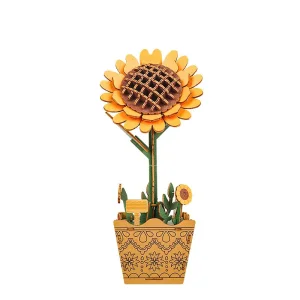
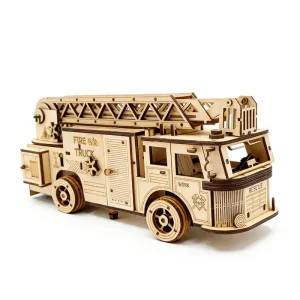
Broaden your inventory with specialized, high-margin mechanical models and seasonal diorama kits.
 CraftODM