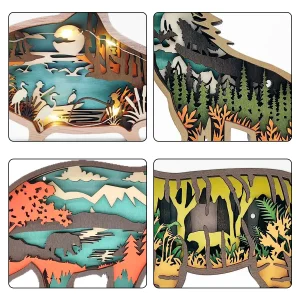
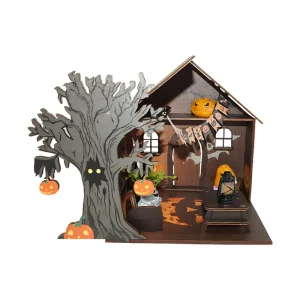
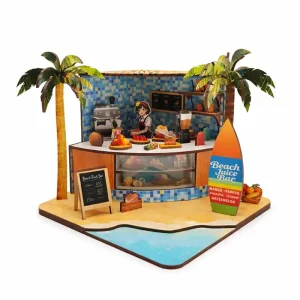
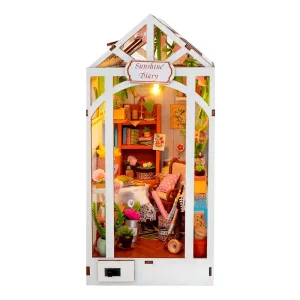
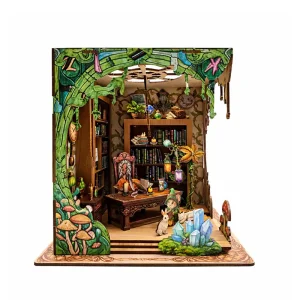
CE Certification Personalized Puzzle Pieces Factories & Products

Whitepaper: Global Compliance, Structural Engineering Solutions, and Strategic Sourcing Framework for Wooden DIY Book Nooks and Custom 3D Puzzles

Industry Landscape

Global Evolution of Wooden Puzzle Pieces & DIY Kits

The global consumer toys, collectibles, and home decor landscape is undergoing a significant transformation. Traditional plastic products are increasingly being replaced by highly detailed, eco-friendly wooden assemblies. Sourcing teams worldwide, representing premium toy brands, boutique gift retailers, museum gift shops, and private labels, are identifying wooden 3D puzzles, DIY book nooks, and educational Montessori toys as major pillars of category growth.

This shift is driven not only by aesthetics but by structural and ecological preferences. Precision-engineered premium wooden boards, such as FSC-certified basswood, poplar, and CARB-compliant MDF, have set new standards for product structural integrity. High-accuracy laser cutting allows complex, micro-interlocking components to assemble flawlessly without adhesives. However, with this complexity comes the imperative for strict international compliance, specifically CE certification and EN71 verification.

Key Market Driver: Compliance & Integrity

As customized and personalized puzzle shapes become mainstream for corporate branding, education, and collector markets, securing certified suppliers capable of high-volume laser production with strict tolerance limits (+/- 0.05mm) has become a primary bottleneck for enterprise procurement.

200+
MOQ Threshold
Lower entry barriers for customized OEM design validation.
<0.05mm
Laser Cutting Precision
Ensuring flawless interlocking joint tolerances.
100%
FSC-Sourced Timber
Meeting rigorous global ecological requirements.
CE/EN71
Safety Standard Conformity
Guaranteed clearance for European Union entry.
Technical Architecture

Regulatory Compliance & Structural Specifications

Meeting the strict demands of European and North American customs, toxicological limits, and electrical standards.

CE Directive Compliance

CE certification signifies that the personalized puzzle assemblies meet EU health, safety, and environmental protection requirements. This encompasses several key standards:

  • EN 71-1: Mechanical & Physical Properties
  • EN 71-2: Flammability Resistance
  • EN 71-3: Migration of Certain Elements (Toxicology)
  • REACH & RoHS: Restricted Chemical Compounds

Optoelectronic Specifications

For DIY miniature house assemblies and book nook kits utilizing LED circuits, specialized electronics safety criteria must be met to obtain importation clearance.

  • EN IEC 62115: Electric Toys Safety Standard
  • Battery Enclosure Integrity: Secure battery boxes
  • Circuit Design: Underwriter safety current levels
  • Color Temperature Consistency: Even, safe illumination

Material Integrity & Traceability

Wood sourcing directly dictates structural strength, moisture expansion resistance, and laser-cutting edge carbonization.

  • Basswood (Tilia): Premium density, zero warping
  • Poplar Plywood: Flexible core, clean cuts
  • MDF (Medium Density): Formaldehyde emission < CARB P2
  • FSC Chain-of-Custody: Complete forest traceability
Material Class Common Applications Dimensional Stability Formaldehyde Limit Standard Laser Edging Aspect
Premium Basswood Plywood Intricate 3D puzzles, fine gear teeth, micro structures Excellent (<0.1% moisture warp) FSC & EPA TSCA Title VI Compliant Smooth, golden edges, low charring
Poplar Plywood Backing boards, exterior frames, support structures Moderate (best for larger parts) CARB Phase 2 / EN13986 E1 Light coloration, slight carbon residue
Medium Density Fiberboard (MDF) Flat puzzles, printed packaging elements, structural boxes High (sensitive to ambient humidity) Strict EPA Compliant / E0 Grade available Dark brown edges, highly homogeneous
Factory Profile & Direct OEM/ODM Partner

LINYI WOODEN TOYS LIMITED COMPANY

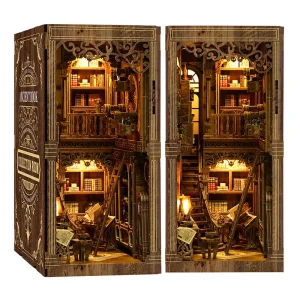
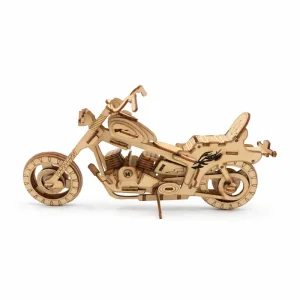
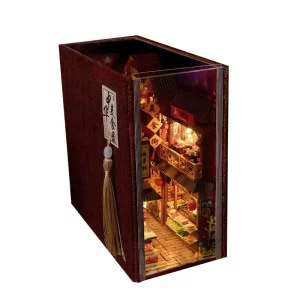
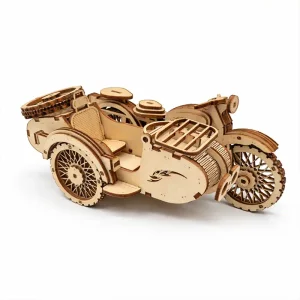
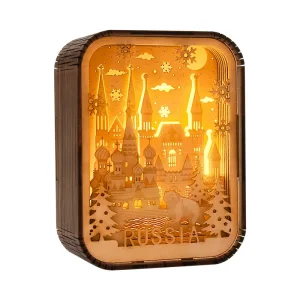
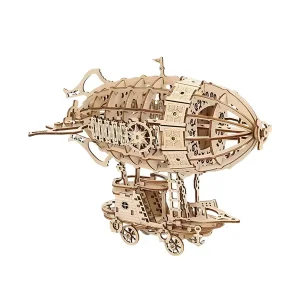
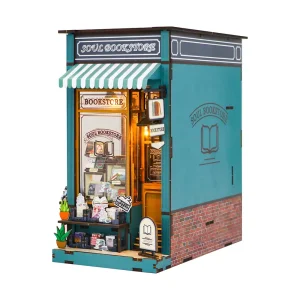
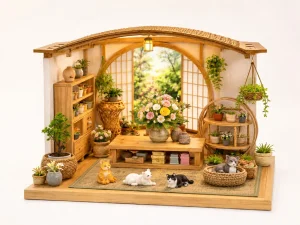
As an industry-leading OEM/ODM manufacturer, LINYI WOODEN TOYS LIMITED COMPANY is dedicated to delivering certified premium wooden DIY kits, 3D wooden puzzles, LED-lit miniature house kits, book nooks, Montessori educational toys, and custom wooden craft projects. Our factory delivers end-to-end solutions, bridging conceptual designs and large-scale, market-ready physical products.

Our core manufacturing processes utilize advanced multi-head high-precision CO2 laser cutting devices, state-of-the-art flatbed UV printing equipment, and custom design pipelines. This capability allows us to process high-resolution graphics directly onto wood surfaces while maintaining precise mechanical dimensions.

With an standard Minimum Order Quantity (MOQ) beginning at just 200 pieces, we provide global brands, private labels, e-commerce sellers, and museum gift shops the flexibility to validate custom structures and visual formats without excessive upfront capital.

Sourcing Operations & Service Checklist

  • Structural Engineering: Translating designs into mortise-and-tenon structural joints.
  • Laser Engraving & UV Printing: Combining high-definition colors with tactile surface texturing.
  • Assembly & Tolerance Audits: Conducting pre-packing assembly testing to ensure zero defect rates.
  • Compliance Preparation: Aligning testing parameters with SGS, TUV, and Intertek for CE, EN71, REACH, RoHS, and EN IEC 62115 certification.
Execution Protocol

Industrial Sourcing & Manufacturing Workflow

From conceptual structure blueprints to global logistics delivery, engineered for premium market performance.

Phase 1: Design & Structural Optimization

CAD Blueprint Generation & Joint Engineering

We convert physical ideas or flat images into vector files (DXF/DWG/PDF). Joint clearances are optimized based on whether basswood, poplar, or MDF is chosen, factoring in cutting tolerances and local moisture variations.

Phase 2: Prototype Validation & Fit Auditing

Physical Assembly Testing

We generate sample cuts to verify structural stability and ease of assembly. The locking joints are checked for clearance tension, and mechanical actions or LED circuits are rigorously tested.

Phase 3: Material Prep & High-Precision Production

Laser Cutting & Graphic UV Printing

Our factory processes bulk sheets using specialized multi-head laser devices. Graphics are directly cured onto the timber using flatbed industrial UV printers, ensuring high color accuracy and scratch resistance.

Phase 4: Global Compliance Verification

Third-Party Testing & Packaging Design

We arrange testing with partner laboratories to confirm compliance with CE, EN71, REACH, RoHS, and EN IEC 62115 regulations. Visual instructions and customized retail boxes are developed concurrently.

Industry Innovation

Technological Roadmap & Future Industry Horizons

Anticipating emerging trends and shifting compliance frameworks for wooden DIY consumer products.

1. Integration of Smart Technologies

The integration of technology into wooden miniatures is evolving. Beyond traditional LED systems, next-generation assemblies feature motion-activated lighting, embedded Bluetooth audio modules, and ambient light sensors. To maintain compliance, these components require design planning to conform to the electromagnetic compatibility directives under EN IEC 62115.

2. Zero-Plastic Eco-Packaging

Global environmental guidelines are shifting from product-only rules to holistic packaging evaluations. Brands are transitioning away from plastic shrinkage wraps and internal bags, replacing them with FSC-certified paper alternatives, soy-based inks, and biodegradable cellulose bags. This alignment helps brands navigate upcoming EU packaging waste regulations.

3. Digital Integration & AR Assembly Guides

Traditional printed manuals are increasingly supplemented by interactive 3D digital instructions. Augmented Reality (AR) applications allow end consumers to scan puzzle boards to view 3D assembly simulations on mobile screens, reducing construction frustration and improving consumer engagement.

4. Advanced Water-Based Coating Chemistry

To align with strict chemical migration limits under EN 71-3, factories are adopting specialized water-based primers and non-toxic UV inks. This formulation eliminates volatile organic compound (VOC) emissions during cutting and assembly, while delivering scratch-resistant, high-definition graphics.

Expert Consultation

Frequently Sourced Questions & Technical Answers

Direct engineering and compliance advice for professional procurement managers.

Why is CE certification critical for custom 3D wooden puzzles and book nook kits?
CE certification is a mandatory conformity mark for products placed on the market in the European Economic Area (EEA). Wooden DIY kits and book nooks are classified under toy regulations if intended for play, or under decorative standards if designed as collector pieces. Without third-party tested conformity showing compliance with EN71 parts 1, 2, and 3, shipments are subject to customs seizure, import rejection, or post-market recall.
How does LINYI WOODEN TOYS LIMITED COMPANY handle the custom OEM design process?
We provide a comprehensive, one-stop service starting from product concepts, structure engineering, vector design, high-precision laser cutting, and UV printing, up to instruction creation and final retail packaging. Sourcing managers can provide basic artwork or vector blueprints, and our team handles joint calibration and physical prototyping to prepare the design for mass production.
What is the standard Minimum Order Quantity (MOQ) for custom wooden puzzle commissions?
Our standard production MOQ starts at 200 pieces. This flexible starting quantity is designed to support brand owners, hobby shops, and private labels during new product launches, allowing market testing of custom styles without substantial initial capital commitments.
What types of wood are available, and how do they differ in quality and cost?
Our primary materials include basswood, poplar, and MDF. Basswood plywood is the premium choice, offering tight wood grain, minimal warpage, and high stability for structural gears. Poplar is a cost-effective alternative for structural backing plates, while MDF offers flat surfaces ideal for direct UV color printing, though it requires dry storage conditions to avoid moisture absorption.
Can the factory arrange testing for EN71-3 (toxic heavy metals) and chemical compliance?
Yes, we coordinate chemical compliance audits and EN71-3 material testing. We submit our raw materials, paints, and UV curing inks to certified third-party testing laboratories (like SGS, Intertek, or TUV) to verify that all materials fall safely below restricted toxic migration limits.
How do you guarantee interlocking joint precision in mass production?
We maintain our laser cutting tolerances below +/- 0.05mm. Before cutting, we calibrate our cutting paths to account for laser kerf loss. In addition, our quality control team runs physical assembly tests on product batches to ensure all components interconnect properly across varying seasonal humidity conditions.
Do you offer FSC certified wood materials?
Yes. We offer FSC (Forest Stewardship Council) certified wood material options. Sourcing FSC-certified materials ensures that the wood used in your products originates from responsibly managed forests, supporting compliance with international supply chain sustainability mandates.
How are LED lighting components configured for DIY book nooks, and are they safe?
Our lighted miniature kits utilize low-voltage LED circuits powered by standard AA, AAA, or button-cell batteries. The wiring connections are fully insulated and pre-soldered, with secure battery boxes, designed to meet the electrical toy safety requirements of EN IEC 62115.
What file formats should we supply for our custom graphics and layouts?
We recommend vector format files, such as AI, PDF, DXF, or DWG, for laser cutting paths. For color designs and UV printing surfaces, high-resolution raster formats (PSD, TIFF, or PDF) with a minimum resolution of 300 DPI are preferred to ensure sharp print output.
What is the standard production lead time for bulk orders?
Standard production times range between 25 to 35 days from sample verification and deposit confirmation. The timeline may vary depending on order volume, customization complexity, and the current production schedule.