Top Wooden Craft Kit Manufacturers for Global Buyers?

Time:2026-10-25 Author:Isabella
0%

Choosing a Wooden Craft Kit manufacturer involves more than comparing prices and product photos. Global buyers need reliable materials, consistent cutting, safe finishes, and packaging that survives long-distance shipping. A polished sample can hide weak glue, rough edges, or unclear instructions.

David Pye, a respected authority on craft workmanship, wrote, “The workmanship of risk is that in which the quality of the result is not predetermined.” His idea remains useful here. Each kit reflects practical decisions, from plywood thickness to laser-cut accuracy. Manufacturers should explain their wood sources, production controls, age recommendations, and testing procedures. Buyers should request samples, inspect joints, and test assembly steps before placing large orders.

Small details matter. Parts should fit without force. Instructions should show real stages, not idealized images. Paints and adhesives must suit the intended market and user age. Responsible suppliers can also provide traceability, recyclable packaging, and documentation for applicable safety requirements. Certifications may help, but they do not replace direct inspection.

This guide compares leading Wooden Craft Kit manufacturers for global buyers. It considers product quality, customization, minimum order quantities, communication, production capacity, and after-sales support. Some suppliers may appear affordable but deliver inconsistent batches. Others may offer excellent craftsmanship but limited flexibility. That trade-off deserves attention.

No ranking is permanently perfect. Market conditions change. A manufacturer suitable for classroom kits may not suit retail gift boxes. The strongest choice depends on your product goals, buyer expectations, and quality standards. Expect questions. Ask for evidence. Examine the unfinished details.
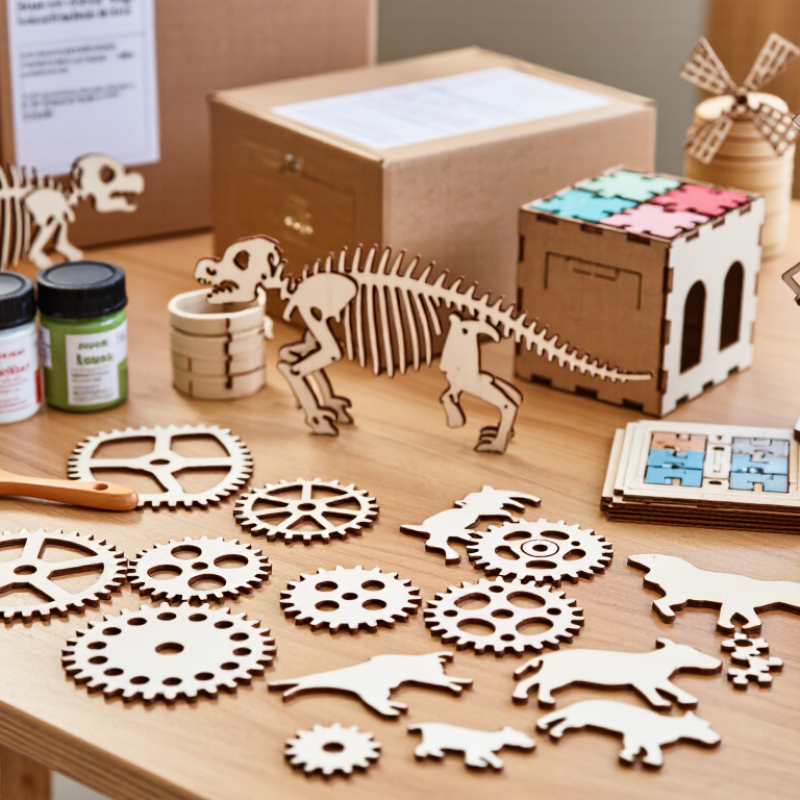
Top Wooden Craft Kit Manufacturers for Global Buyers?

Types of Wooden Craft Kit Manufacturers for Global Buyers

Types of Wooden Craft Kit Manufacturers for Global Buyers

Wooden craft kit manufacturers usually fall into several practical categories. OEM manufacturers produce kits from a buyer’s drawings, packaging plan, and material specifications. They suit retailers that already understand their target customers. ODM manufacturers offer ready-made designs, then adjust colors, tools, instructions, or box sizes. This option can reduce development time.

Specialized educational manufacturers focus on children’s craft kits, classroom projects, and beginner-friendly activities. Their stronger suppliers test edge smoothness, small parts, paint safety, and instruction clarity. Adult hobby manufacturers often make detailed models, carving sets, or mechanical wooden projects. These kits need accurate cutting, stable wood, and carefully measured components. Small-batch workshops provide more flexible customization. However, their capacity may change during busy seasons.

For global buyers, factory capability matters as much as product appearance. Ask whether the manufacturer can provide material records, batch inspection reports, and age-appropriate safety documentation. Confirm how the wood is sourced and whether packaging follows destination-market requirements. I have found that sample testing reveals problems hidden in digital catalogs, such as warped panels, weak glue joints, or unclear diagrams. Communication also deserves attention. A reliable supplier should explain tolerances, production timelines, replacement policies, and carton protection without vague promises. The cheapest quote can become expensive after revisions and damaged shipments. Not every attractive prototype deserves mass production. A careful trial order remains wiser.

Top Wooden Craft Kit Manufacturer Types for Global Buyers

Typical buyer-planning benchmarks by manufacturer type

Large-scale OEM/export factories generally support higher order volumes and longer production planning, while artisan workshops and small-batch manufacturers are more suitable for low-volume orders and distinctive customization. Educational kit specialists typically focus on child-safe components, clear instructions, and repeatable product designs. Figures shown are typical industry planning ranges and are not associated with any specific company or brand.

Key Factors for Evaluating Wooden Craft Kit Suppliers

Global buyers should evaluate wooden craft kit suppliers beyond attractive product photos. Grand View Research estimated the global arts and crafts market at approximately USD 44 billion in 2023, with continued growth expected through 2030. That expansion increases supplier choices, but also creates uneven quality. Request production samples, material specifications, moisture limits, and recent inspection records. A polished sample can mislead.

Wood source and traceability deserve close attention. Ask whether suppliers can document legally harvested timber, responsible forestry practices, and consistent species selection. Check plywood thickness, edge finishing, paint safety documents, and small-part warnings. The European Chemicals Agency and United States regulatory guidance both emphasize chemical compliance and child-product safety. Requirements differ by destination. Do not accept one certificate as universal proof.

Operational reliability matters just as much. Compare defect rates, minimum order quantities, monthly capacity, packaging strength, and replacement procedures. ISO Survey 2023 reported more than 1.5 million ISO 9001 certificates worldwide, yet certification alone cannot confirm daily performance. Audit the factory, or use an independent inspection service. Ask for batch photographs and carton-drop testing when shipping overseas. Supplier communication may still fail during peak seasons. That risk should appear in the purchasing plan, not remain an optimistic assumption.

Manufacturing Standards and Product Quality Requirements

For global buyers, wooden craft kits should meet documented safety and manufacturing standards before price is considered.

ASTM F963-23, EN 71, and ISO 8124 address mechanical hazards, flammability, migration of harmful elements, and age grading. Suppliers should provide current laboratory reports for finished kits, not only raw wood or paint samples. Small parts need testing after reasonable use, including drops, twisting, and pulling. Children handle these kits roughly.

Material control begins with traceability.

FSC’s 2023 Facts & Figures reported more than 236 million hectares of certified forest worldwide, showing the scale of responsible sourcing. Buyers should request valid chain-of-custody evidence when certified wood is claimed. Each shipment should identify wood species, coating batch, production date, and factory location.

Moisture content also matters.

Excess moisture can cause warping, mold, or loose joints during ocean transport. A practical incoming inspection can check dimensions, surface splinters, odor, color consistency, and package damage.

Quality systems should include pre-production samples, first-article approval, and random inspections based on an agreed sampling plan.

Independent testing helps, but paperwork can hide weak production control. I would still open cartons personally. One kit may look excellent while another contains rough edges or missing pieces. That gap deserves attention.

Suppliers should retain test records, corrective-action reports, and retained samples for every batch. Clear instructions, accurate age labels, and secure packaging are equally important, especially when products cross different regulatory markets.

Customization, Packaging, and International Order Services

Top Wooden Craft Kit Manufacturers for Global Buyers?

Choosing a wooden craft kit manufacturer requires more than comparing catalog prices. Experienced buyers examine wood quality, moisture control, sanding, and small-part consistency. Ask for a physical sample before approving a large order. A sample can still hide production problems, so inspect several units from one batch. Customization should cover shapes, colors, tools, instructions, and age-appropriate difficulty. Clear drawings reduce mistakes during production. I have found that simple revisions often create unexpected packaging delays.

Packaging deserves equal attention. Each kit should protect wooden pieces from scratches and moisture during long-distance transport. Kraft boxes, molded inserts, and sealed instruction sheets can improve presentation. Request drop-test photos or a packaging sample. Confirm carton dimensions, gross weight, barcode placement, and pallet requirements. These details affect warehouse handling and shipping costs. Small omissions become expensive later.

Tips: Share artwork in editable formats and confirm color references before production. Use a written approval sheet for samples, packaging, and final quantities. Ask about lead times, inspection procedures, replacement policies, and export documents. Reliable suppliers should explain international order steps clearly, including quotation validity and payment milestones. Avoid promises that sound too perfect. A manufacturer may deliver excellent samples but struggle with seasonal capacity. Leave time for corrections, especially before holiday demand. Personally, I would rather accept a slightly longer schedule than rush an order with unclear responsibilities.

How to Select the Right Manufacturer for Your Market

Choosing a wooden craft kit manufacturer requires more than comparing quotation sheets. Grand View Research estimated the global educational toys market at about USD 62 billion in 2023, with strong growth expected through 2030. Wooden craft kits remain a smaller segment, but demand is becoming more quality-sensitive. Market estimates vary. That uncertainty deserves attention.

Request production samples before signing a large order. Check the wood surface by touch, especially around small holes and painted edges. Ask for timber origin records, coating specifications, and batch inspection reports. A capable manufacturer should explain moisture control, packaging protection, and defect handling clearly. Independent testing against relevant destination standards also matters. Documentation is useful, but it can still be incomplete.

Your market may need different kit sizes, languages, skill levels, and safety instructions. Review the ISO 8124 series and destination-market requirements with a qualified testing body. The 2024 Deloitte Global Chief Procurement Officer Survey highlights resilience, transparency, and supplier risk management as major procurement priorities. Apply those ideas practically: test a small shipment, measure damage rates, and inspect replenishment speed. Do not trust one successful sample too quickly. A factory can perform well once and disappoint later. Personally, I would score suppliers across quality, communication, traceability, lead time, and corrective action, rather than choosing the lowest price.

FAQS

Which safety standards should wooden craft kits meet?

Kits should follow relevant toy safety standards for the destination market. These standards cover small parts, sharp edges, flammability, and harmful substance migration. Age labels must match the tested design. Requirements may differ between markets.

What testing documents should buyers request?

Request current laboratory reports for complete finished kits. Reports should not cover only raw wood or paint samples. Ask for test dates, batch details, and the tested product version. Paperwork alone is not enough.

How should small parts be checked?

Small parts need testing after reasonable use. Apply drops, twisting, and pulling during inspection. Check whether beads, pegs, or connectors loosen. Children can handle kits roughly.

What material records should a manufacturer provide?

Ask for wood species, timber origin, coating batches, and production dates. Each shipment should identify the factory location. Certified wood claims require valid supply-chain evidence. Records may still contain gaps.

Why does wood moisture content matter?

Excess moisture can cause warping, mold, and loose joints during shipping. Ocean transport may expose cartons to humid conditions. Check moisture before production when possible. A simple meter helps.

What should a physical incoming inspection include?

Inspect dimensions, splinters, odors, color consistency, and carton damage. Touch painted edges and small holes carefully. Look for missing pieces inside opened cartons. One sample can mislead you.

How can buyers evaluate a manufacturer before placing a large order?

Request production samples before signing a large order. Review packaging protection, instructions, and defect-handling procedures. Test a small shipment and measure damage rates. Do not choose only by price.

What quality controls should continue after approval?

Use pre-production samples, first-article approval, and random inspections. Retain samples and test records for every batch. Record corrective actions when defects appear. I would still open cartons personally.

Conclusion

Choosing the right Wooden Craft Kit manufacturer is essential for global buyers seeking reliable quality, competitive pricing, and long-term cooperation. Manufacturers may specialize in educational kits, DIY hobby sets, decorative projects, or customized products for different age groups and markets. Buyers should evaluate supplier experience, production capacity, material sourcing, communication efficiency, sample quality, pricing transparency, and delivery performance. Clear product specifications and responsive service can greatly reduce purchasing risks.

Manufacturing standards should cover safe, durable wood, smooth surfaces, accurate components, non-toxic finishes, clear instructions, and consistent quality control. International buyers should also consider customization options, multilingual packaging, labeling requirements, protective packaging, export documentation, and flexible minimum order quantities. The best manufacturer is not always the lowest-cost option; it should be able to balance product quality, design flexibility, dependable production, and international order support. By comparing suppliers carefully and testing samples before placing large orders, businesses can select a suitable partner for their target market and build a stable, trustworthy supply relationship.


Isabella

Isabella

Isabella is a dedicated marketing professional with a sharp focus on driving brand growth and engagement through strategic content creation. With an extensive background in digital marketing, she combines her passion for storytelling with her keen understanding of industry trends to deliver......