A 3D Dollhouse Kit can be a tiny room, a full miniature home, or a detailed scene built around a single theme. The top types differ in scale, materials, assembly, and the kind of experience they offer. Some kits use laser-cut wooden panels, with neat slots and crisp edges. Others combine printed parts, plastic pieces, or mixed materials. A bookshop, greenhouse, vintage kitchen, and modern apartment each create a different building challenge. Small details matter: a miniature lamp may need wiring, while a paper flower needs a steady hand. Not every kit is beginner-friendly.
Miniature artist and educator Rik Pierce is a recognized voice in the craft. I can’t verify a direct, topic-specific quotation from him, so I won’t invent one. His work offers a useful reminder: careful planning and patient construction shape the finished miniature. That sounds simple. It isn’t always. Parts can fit imperfectly, instructions may leave questions, and the final result may differ from the box image. Those are real considerations, not reasons to dismiss a kit.
This guide compares the leading types of 3D dollhouse kits by construction style, complexity, and display value. It will help readers distinguish quick-build room boxes from larger, customizable houses and intricate themed scenes. The aim is practical: choose a kit that suits your space, tools, patience, and appetite for detail. A beautiful miniature should invite making, not just look impressive in a photograph.
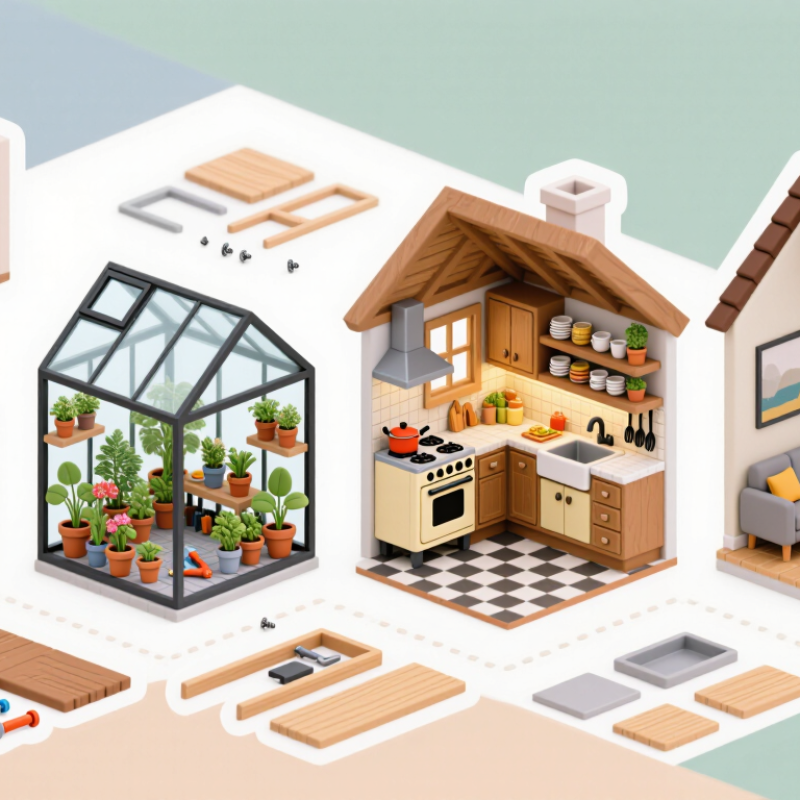
A 3D dollhouse kit is a buildable miniature environment, not merely a printed picture or finished display piece. Its parts—often laser-cut wood, paperboard, plastic, or resin—join to form walls, floors, stairs, and furniture with real depth. That depth matters. Open doors, layered rooms, and tiny hinges make a model feel spatial, while demanding careful measuring and steady hands. Some kits use glue and paint; others rely on tabs, screws, or prefinished pieces. Contents vary. Check piece counts, scale, tool needs, and age guidance before buying; a “complete” kit may still omit glue or paint.
Industry context helps, but it does not tell us which kits are well made. Circana’s 2023 U.S. toy-market data put sales at $28.3 billion, down 8% year over year. That broad-market figure does not isolate dollhouse kits, so it should not be treated as a demand forecast. In practical terms, a kit combines materials, instructions, and parts intended to assemble into a stable, three-dimensional miniature home. Look for numbered steps, clear diagrams, and replacement-part details. Even good instructions can leave ambiguity around tiny wiring or delicate trim. That is worth acknowledging. Assembly time also depends on experience, workspace, and drying time; advertised hours are estimates, not guarantees.
Material shapes a dollhouse kit’s weight, surface, and assembly experience. Plywood and basswood are common choices for sturdy walls and floors. Their edges can be sanded, and paint usually adheres well after priming. Thin pieces may still split if you force a tight-fitting tab. MDF offers smooth surfaces for painted rooms, but it is heavier and can swell when exposed to moisture. Plastic parts resist spills and often suit molded details, though seams may need careful finishing. Cardstock kits are lightweight and easy to cut, but less forgiving of damp hands. Resin can capture tiny trim details; inspect small pieces for brittleness. Feel the edges. A materials note matters.
The wider manufacturing context is changing: Wohlers Associates’ Wohlers Report 2024 estimated global additive-manufacturing revenue at $20.035 billion in 2023, an 11.1% rise from 2022. This figure covers the broader industry, not dollhouse kits, so it does not prove a shift in kit materials. It does show that advanced production methods are gaining scale.
Tips: Match material to your workspace. For wood, dry-fit parts before gluing and use a fine sanding block on visible edges. For MDF or paper, keep water-based glue sparing. Check whether windows, hinges, and tiny trim pieces use different materials than the main panels. Small parts matter. I’d still compare the actual piece thickness and instructions; material labels alone can be misleading.
Victorian, cottage, farmhouse, and modern designs are among the most common architectural styles in 3D dollhouse kits. Victorian kits often feature steep roofs, bay windows, decorative trim, and small porches. These details create a richly layered look, but they may require careful assembly and patience with tiny pieces. Cottage styles feel simpler, with uneven rooflines, compact rooms, and charming window shapes. They suit builders who enjoy a cozy, lived-in appearance.
Farmhouse kits typically use broad porches, plain siding, and balanced window placement. Modern styles take a different route, with clean lines, open layouts, and large glass panels. Colonial and Tudor-inspired kits also appear regularly. Their symmetrical fronts or timber-like details make them easy to recognize. In practice, style labels can blur: a kit may mix farmhouse interiors with Victorian trim. That is not necessarily a flaw, though it can make historical accuracy harder to judge.
Tips: Check the room layout and included exterior details before choosing by style alone. Look for clear diagrams, labeled parts, and realistic photos of the finished model. Small details matter. A delicate railing can add character, but it may also be fiddly to install. If you are new to miniature building, a simpler façade can leave more time for furnishing and finishing the rooms.
A 3D dollhouse kit’s theme affects more than its exterior. It guides room proportions, window shapes, colors, and the furniture included. A Victorian design may feature narrow staircases, patterned wallpaper, and carved chairs. Those details create atmosphere, but they can leave less room for larger furnishings.
Cottage kits often use simple floor plans, pale finishes, and compact wooden tables. Modern themes tend to favor open layouts, clean lines, and fewer decorative pieces. Fantasy kits may introduce unusual rooflines or oversized features. Scale matters. A chair that looks charming alone can overwhelm a small room, so compare furniture dimensions with the kit’s scale before assembly.
Think about how you want to furnish each space. A kitchen needs usable counter surfaces, while a sitting room benefits from clear paths around chairs. Check whether the kit includes furniture or leaves rooms open for personal choices. Materials and printed patterns can also affect the finished look; a glossy floor may not suit a quiet, rustic interior. In practice, theme labels are only a starting point. Some kits mix styles, and that can be appealing, though the result may feel less consistent than expected. Details can mislead.
Choosing a 3D dollhouse kit is easier when you match its detail to the builder’s patience and experience. Simple kits with larger pieces and fewer wiring steps can suit beginners and older children, often around age eight or above with adult help. Always check the kit’s stated age guidance: tiny accessories, sharp tools, or small parts may not suit younger children. Age is only a guide, not a measure of skill.
Intermediate kits usually ask for steadier hands and more careful reading. Builders may need to sort miniature furniture, fit narrow panels, or apply glue without smearing it across printed flooring. These projects often suit teens and adults who have completed a few craft builds. Advanced kits can include delicate trim, layered assembly, and lighting. They are better for experienced hobbyists, though a patient beginner can still try one with enough time. It may take longer than expected.
Tips: Before opening the glue, lay out the pieces and compare them with the instructions. Use a bright lamp and a shallow tray for tiny parts. Take breaks when details blur. A small mistake can happen; test-fit pieces before fixing them, and ask for adult supervision when children use tools.
Complexity ratings are a general comparison, not a standardized measurement. The age suggestions are a rough starting point; check each kit’s age label and instructions, especially when small parts, sharp tools, or electrical components are involved. Younger builders may need adult supervision.
It is a set of parts that form a miniature home with real depth. Walls, floors, stairs, and furniture may be included.
Kits may use laser-cut wood, paperboard, plastic, or resin. Some need glue and paint; others use tabs or screws.
Not always. Check the piece list, scale, and tool requirements; glue or paint may be sold separately.
Victorian kits may have narrow stairs and carved chairs, while modern designs often use open rooms. Styles can mix, sometimes less neatly than expected.
Compare furniture dimensions with the kit’s scale before assembly. A charming chair can crowd a small room.
A simpler kit with larger pieces and fewer wiring steps is often easier. Take your time.
Some may suit children around age eight or older with adult help. Check age guidance, small parts, and tool needs carefully.
Spread pieces on a clear table, use a bright lamp, and keep tiny parts in a shallow tray. Test-fit before gluing. Instructions can still be vague.
It depends on experience, workspace, and drying time. Advertised hours are estimates, not promises.
A 3d Dollhouse Kit is a collection of components and instructions for building a miniature house, often with small furnishings and decorative details. Kits can vary widely in construction material: wood may offer a sturdy, traditional feel, while paper, cardboard, or plastic can make a project lighter or easier to assemble. The material influences the finished look, durability, tools needed, and amount of hands-on work.
Common architectural styles range from cozy cottages and classic homes to contemporary spaces, with themes guiding the colors, furnishings, and tiny accessories. A garden-inspired, historical, or modern theme can give the same basic structure a distinct personality. When choosing a kit, consider both the builder’s age and experience. Simpler designs with larger pieces suit beginners and younger hobbyists, while intricate builds with many small parts are better for patient, experienced makers.

CraftODM