How to Choose the Best Wooden 3D Puzzle?

Time:2026-09-23 Author:Amelia
0%

Choosing the best Wooden Puzzle 3d begins with more than attractive photos or impressive piece counts. A reliable choice should match the builder’s age, patience, experience, and available space. Examine the wood carefully. Smooth edges, consistent cutting, and clean printing usually indicate better quality control. Pieces should connect firmly, but they should not require excessive force. A strong puzzle feels precise in your hands.

Think about the building experience.

I once chose a model because its finished shape looked elegant. The instructions were unclear, and several pieces appeared almost identical. That mistake taught me to check assembly guides, customer feedback, and product measurements before buying. A trustworthy brand should provide accurate dimensions, material information, and practical support. Reviews with real photographs can reveal loose joints, missing parts, or fragile sections more honestly than promotional images.

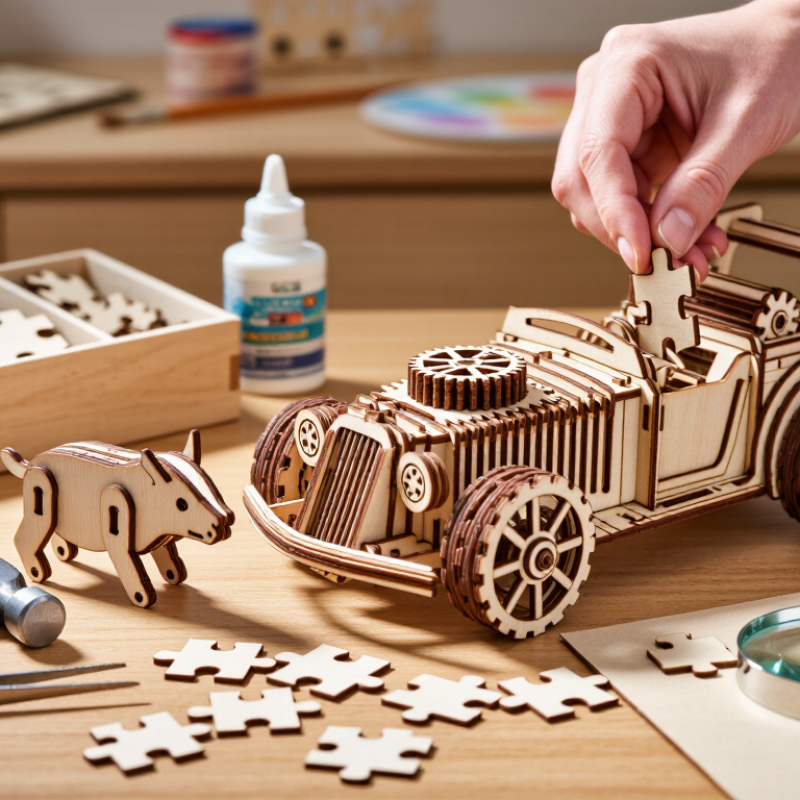
Consider the purpose as well. A small animal model may suit a beginner, while a mechanical vehicle can challenge an experienced builder. Check whether tools or glue are required. Water-based paints and responsibly sourced wood are preferable when product details are available. Younger users also need suitable supervision, especially with small components. Certification claims should come from recognizable testing organizations, not vague packaging language.

The “best” puzzle is not always the largest or most expensive. It is the model that offers a satisfying challenge without turning the table into a battlefield. Compare difficulty, design, durability, and learning value. Then question your own expectations. A beautiful puzzle can still disappoint if its construction feels rushed.
How to Choose the Best Wooden 3D Puzzle?

Understanding Wooden 3D Puzzle Types and Construction Styles

How to Choose the Best Wooden 3D Puzzle?

Understanding construction styles matters more than attractive packaging. Interlocking puzzles use tabs, slots, and friction. They usually suit beginners. Mechanical models add gears, axles, or moving panels. These require tighter tolerances and patient testing. Architectural kits often use layered plywood or solid wood pieces. Their strength depends on grain direction, joint depth, and support points. Check the cut edges. Burn marks, splinters, or uneven slots can weaken assembly.

Material choice affects both feel and durability. Laser-cut plywood is light and consistent. Solid wood feels warmer but may vary with humidity. A 2023 U.S. Consumer Product Safety Commission report recorded about 231,000 toy-related injuries treated in emergency departments. That figure reinforces the need for smooth edges and age-appropriate parts. Look for clear age guidance and documented safety testing. Standards such as ASTM F963 address toy hazards, including small parts and sharp points.

Complexity should match the builder, not the product photograph. A model with 300 pieces may feel easier than one with 100 poorly engineered parts. I once assumed thicker wood meant better quality. It did not. Loose joints caused the finished structure to lean. Examine the instruction clarity, connection system, and replacement-part policy. Grand View Research’s wooden-toy market analysis also identifies educational value and sustainable materials as important demand factors. Still, sustainability claims deserve verification. Ask whether the wood source, finish, and packaging are clearly disclosed.

Assessing Difficulty, Age Suitability, and Building Time

How to Choose the Best Wooden 3D Puzzle?

Choosing a wooden 3D puzzle starts with difficulty, not appearance. A detailed castle may look attractive but overwhelm a first-time builder. Check the piece count, connection style, and instruction quality before buying. Interlocking tabs usually feel easier than tiny slot connections. I learned this after spending an evening correcting one poorly aligned wall.

Age suitability matters for both enjoyment and safety. Check the stated age range carefully. Younger children may need larger pieces and simpler structures. Small parts can create a choking risk, so adult supervision remains important. Older children often enjoy moderate challenges, especially when the model connects with a clear progression.

However, age labels are not perfect. A patient eight-year-old may manage a harder puzzle than a rushed teenager.

Building time should match the builder’s attention span. A small model may take 30 to 60 minutes, while a complex structure can require several sessions. Count breaks, sorting, and occasional mistakes. I usually place pieces in shallow trays and keep the instruction sheet nearby. It prevents unnecessary searching. Still, advertised times can be optimistic. My first timed build took nearly twice as long because I skipped the sorting stage. Choose a puzzle that leaves room for concentration, not frustration.

Comparing Materials, Craftsmanship, and Safety Features

Choosing the best wooden 3D puzzle starts with material quality. Solid beech and birch plywood usually provide a firm, stable feel. Softer wood can dent easily and produce rough edges. Look closely at the grain, especially around small tabs and holes. A clean cut should feel smooth, not sharp.

Craftsmanship matters more than decoration. Pieces should fit with gentle pressure, yet remain secure during assembly. Uneven cuts often signal rushed production. A 2024 Grand View Research report valued the global toys market at about $108.7 billion in 2023, showing the scale of this industry. However, market growth does not guarantee careful workmanship. I would inspect several pieces by hand, because product photos can hide poor sanding.

Safety deserves equal attention. Check whether the puzzle identifies compliance with recognized standards, such as ASTM F963 or EN 71. These standards address mechanical hazards, flammability, and chemical safety. The U.S. Consumer Product Safety Commission reported an estimated 231,500 toy-related emergency-room injuries among children under 15 in 2023. Small detachable parts deserve special caution. Water-based coatings may be preferable, but the label should still disclose testing information. FSC certification can also support responsible wood sourcing, though it does not replace toy-safety testing. A puzzle can look beautiful and still fail in practice. That is the part many buyers miss.

How to Choose the Best Wooden 3D Puzzle?

Material selection affects durability, machining quality, weight, and surface feel. The chart compares commonly used puzzle woods using approximate air-dry density and Janka hardness values. Higher hardness generally offers better resistance to dents, while density affects the puzzle’s weight and perceived solidity.

Craftsmanship: Look for consistent laser-cut or machined edges, accurate interlocking joints, minimal burn marks, and smooth sanding. Denser woods can produce durable parts but may require more precise cutting.

Safety features: Choose puzzles with securely bonded parts, no sharp splinters, non-toxic coatings, and age-appropriate piece sizes. In Europe, toys are covered by EN 71 requirements, while toys sold in the United States are subject to ASTM F963 and applicable federal safety rules.

Material figures are approximate published averages. Janka hardness reference: ASTM D1037-based wood property data. Density values refer to approximate air-dry wood density and vary with moisture content and grade.

Choosing a Puzzle That Matches Personal Interests and Goals

How to Choose the Best Wooden 3D Puzzle?

Choosing a wooden 3D puzzle well starts with your personal purpose. A calming evening project needs a different design from a challenging display model. Consider your interests, patience, available space, and desired completion time. Nature lovers may prefer animals or landmarks. Mechanical thinkers might enjoy gears, moving parts, or architectural structures.

Market conditions also support careful buying. Circana’s 2023 U.S. toy market report recorded an 8% sales decline and a 7% unit decline. That makes purposeful selection more sensible than impulse buying. Check the piece count, recommended age, assembly difficulty, and finished dimensions. A compact model suits a small desk. A larger structure may better serve someone seeking a weekend challenge.

Your goal should guide the level of complexity. The American Academy of Pediatrics states that play supports cognitive, social, and emotional development, while the American Psychological Association’s Stress in America survey reported that 76% of adults experienced stress-related symptoms in 2022. A puzzle may offer focused offline time, but it is not a treatment. I sometimes choose difficult designs because they look impressive, then abandon them halfway. That mistake is useful. Select a puzzle that stretches your skills without turning every session into a test. Read independent reviews, inspect assembly photographs, and confirm whether tools or glue are required. Small details matter.

How to Choose the Best Wooden 3D Puzzle? — Choosing a Puzzle That Matches Personal Interests and Goals

Use this comparison table to match puzzle characteristics with interests, available time, experience, and intended use.

Puzzle Profile Typical Piece Count Typical Assembly Time Recommended Experience Best-Matched Interests Primary Goal Key Selection Check
Beginner Mini Model Under 80 pieces 30–90 minutes First-time builders and children who can safely handle small parts Simple animals Small vehicles Basic shapes Learn how interlocking wooden parts work without a long commitment Choose clearly numbered or illustrated instructions
Relaxing Decorative Model 80–200 pieces 1–4 hours Beginners to casual hobbyists Nature Animals Home décor Enjoy a calm activity and create a small display object Check the finished size and whether the model stands securely
Mechanical Challenge 100–300 pieces 2–8 hours Intermediate builders who enjoy problem-solving Gears Moving parts Engineering Understand mechanisms while building a functional or movable model Look for clear part orientation, sturdy connections, and tested movement
Architectural Landmark 150–500 pieces 4–12 hours Intermediate to advanced builders Architecture History Travel Combine construction practice with an interest in buildings and places Compare the completed model’s scale, footprint, and structural complexity
Vehicle or Transport Model 100–400 pieces 3–10 hours Intermediate builders and vehicle enthusiasts Cars Ships Aircraft Build a recognizable object with details, symmetry, and possible moving features Check whether wheels, propellers, doors, or other features are functional
Large Display Project 300–800+ pieces 8–20+ hours Experienced builders with patience and dedicated workspace Detailed models Collections Craft projects Complete a substantial project and create a long-term centerpiece Measure the display area and confirm that replacement parts or support are available
Family or Group Build 80–250 pieces 1–6 hours, split into sessions Mixed experience levels Family activities Classroom use Team projects Encourage communication, planning, and shared hands-on learning Prefer larger parts, stable construction steps, and instructions with visual guidance
Gift-Oriented Puzzle Varies by recipient and design 1–12 hours Match the recipient’s previous building experience Personal hobbies Special occasions Collecting Give an engaging activity that reflects the recipient’s interests Verify age guidance, difficulty, finished dimensions, and the recipient’s preferred theme
Practical selection rule: Piece counts and completion times are typical ranges rather than fixed standards. Actual difficulty depends on part size, cutting precision, instructions, model geometry, and the builder’s experience. Always check the specific puzzle’s age guidance, dimensions, materials, and assembly instructions before purchasing.

Evaluating Price, Brand Reputation, and Overall Value

Choosing the best wooden 3D puzzle requires more than comparing price tags. Circana’s 2023 global toy report recorded a 7% decline in toy sales, increasing pressure on buyers to find genuine value. A low price may look attractive, but calculate cost per hour of play. Check the wood thickness, cutting accuracy, number of pieces, and whether instructions explain difficult steps clearly. A puzzle that takes three evenings can offer better value than a cheaper set finished in twenty minutes.

Brand reputation should be judged through evidence, not colorful packaging. Look for consistent customer reviews, transparent material information, responsive after-sales support, and published safety testing. Standards such as ASTM F963 and EN 71 can indicate that a product follows recognized toy-safety requirements, although certification alone does not guarantee a satisfying build. Independent reviewers and long-term user comments often reveal loose joints, splintered edges, or missing pieces.

I once preferred the cheapest option. It became frustrating quickly. My mistake was ignoring precision. The best choice balances durability, challenge, appearance, and support.

PwC’s 2024 Global Consumer Insights Pulse Survey also identified cost-of-living pressure as a continuing influence on purchasing decisions. Therefore, compare the complete experience, not only the checkout price.

A beautifully finished model may justify extra cost, but only when the materials and construction quality are visible. Some reviews are overly enthusiastic, too. Look for repeated details, photographs, and criticism before deciding.

FAQS

What construction style suits a beginner?

Interlocking puzzles usually suit beginners. Tabs, slots, and friction hold the pieces together. They need little testing.

How do mechanical wooden puzzles differ?

Mechanical models use gears, axles, or moving panels. They need accurate joints and patient testing. Expect occasional adjustments.

Which wood material is more practical?

Laser-cut plywood feels light and consistent. Solid wood feels warmer but can change with humidity. Neither choice is perfect.

What should I inspect before buying?

Check the cut edges carefully. Burn marks, splinters, and uneven slots can weaken assembly. Examine the instructions and connection system too.

How can I match difficulty with my ability?

Judge the design, not just the piece count. Three hundred well-cut pieces may feel easier than one hundred awkward parts. Choose a manageable challenge.

What safety details matter?

Look for clear age guidance and documented safety testing. Smooth edges matter. Small parts need careful handling around young children.

How should personal interests guide the choice?

Choose animals, landmarks, gears, or buildings that hold your attention. A small desk model saves space. A large structure may fill a weekend.

Are sustainability claims always reliable?

Not necessarily. Check whether wood sources, finishes, and packaging are clearly disclosed. Vague claims deserve another look.

Can a wooden puzzle reduce stress?

It may create focused offline time. It is not a treatment. I once chose a difficult model because it looked impressive, then abandoned it halfway. That mistake still matters.

Conclusion

Choosing the best Wooden Puzzle 3d begins with understanding the available types and construction styles, from simple interlocking models to detailed mechanical designs. Consider the puzzle’s difficulty, recommended age, and estimated building time to ensure it matches the builder’s patience, skill level, and available free time. Younger users may benefit from larger pieces and simpler structures, while experienced builders may prefer intricate models that provide a longer and more challenging experience.

Material quality, precise craftsmanship, smooth edges, and safe, non-toxic finishes are also important factors. A good puzzle should feel sturdy, fit together accurately, and offer clear instructions. Personal interests, such as architecture, vehicles, animals, or fantasy themes, can make the building process more enjoyable and meaningful. Finally, compare the price with the puzzle’s size, design complexity, durability, and overall educational or entertainment value. Reading general customer feedback and considering the manufacturer’s reputation can help you make a confident, worthwhile choice.


Amelia

Amelia

Amelia is a seasoned marketing professional with a wealth of expertise in our company’s core offerings. With an unwavering passion for driving growth and innovation, she plays a pivotal role in shaping our marketing strategies and enhancing brand visibility. A key aspect of her responsibilities......