Choosing the right 3d Diy Model Kit can shape your store’s reputation, customer satisfaction, and repeat sales. A kit may look impressive online, yet perform poorly on a crowded retail shelf. Details matter.
Chris Anderson, author of Makers and a leading voice in the maker industry, wrote, “If you can make it, you can change it.” This idea fits 3d Diy Model Kit retail perfectly. Customers want more than a finished object. They want a clear building experience, satisfying progress, and a model worth displaying.
A practical buying decision begins with the customer. Are they children, hobbyists, families, or experienced collectors? Check the material, part quality, assembly time, tool requirements, and instruction design. Small parts should have clear age guidance. Packaging should protect delicate pieces and show the completed model from several angles. A sturdy box helps during shipping and improves shelf appeal.
Test the kit yourself before ordering deeply. Open the box. Count the parts. Follow the instructions without guessing. A confusing step can become a costly return. Almost perfect kits still have weak points.
Store owners should also compare wholesale pricing, minimum order quantities, replacement-part policies, and supplier communication. Ask whether the design can be customized for seasonal displays or local interests. Track customer feedback after launch. One overlooked detail may matter more than a beautiful product photo.
This guide explains how to compare 3d Diy Model Kit options with practical judgment, honest testing, and a clear focus on long-term store value.
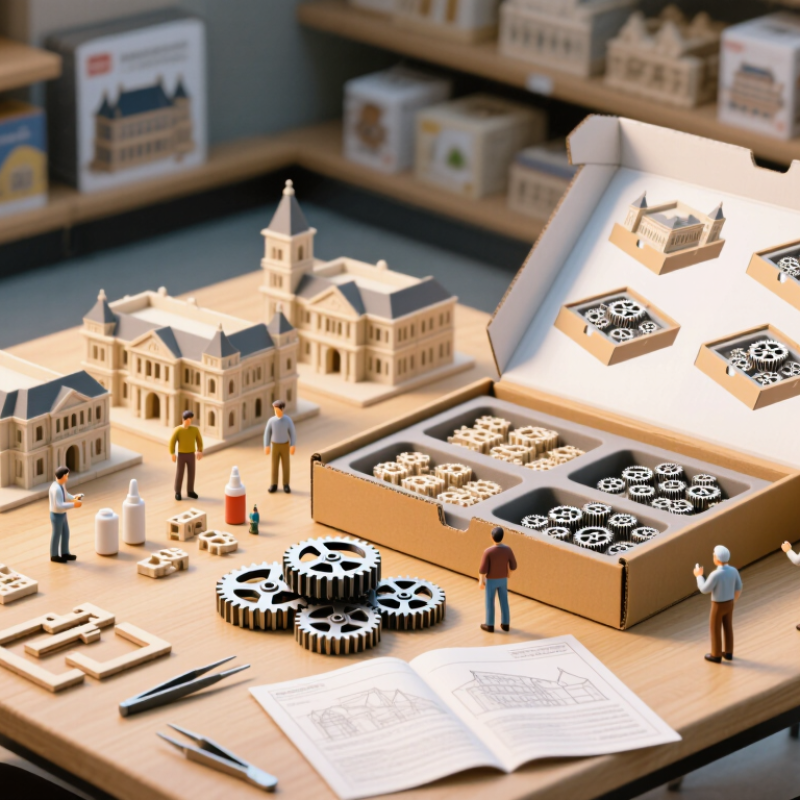
The market for 3D DIY model kits is broader than a single hobby group. Customers include families, collectors, students, and adults seeking screen-free activities. Each group expects something different. A parent may prioritize safe materials and simple instructions. An experienced builder may prefer intricate details, realistic textures, and longer assembly time. Store owners should identify their main shoppers before choosing product depth or price.
Reliable market research combines several practical signals. Review local search trends, marketplace feedback, competitor prices, and seasonal sales records. Visit craft fairs or hobby events when possible. Notice which displays attract attention, even when visitors do not purchase immediately. Ask customers about preferred themes, building time, and acceptable prices. Their answers may challenge assumptions. A popular subject online may perform poorly in a local store.
Test a sample kit before placing a large order. Check whether pieces fit cleanly, instructions use clear language, and small parts remain organized. Measure the finished model for shelf planning. Confirm material information, age guidance, and packaging quality. One useful lesson is that impressive pictures cannot repair frustrating assembly. I once focused too heavily on appearance. The missing detail was completion time. Now, I compare visual appeal with the customer’s available patience, budget, and confidence. Seasonal bundles may work well, but unsold stock can quickly occupy valuable shelf space.
Understanding material requirements can help retailers select model kits that match customer skill levels and product expectations.
The chart compares typical nozzle-temperature midpoints for commonly used 3D-printing materials. PLA generally offers the lowest technical barrier for beginner-friendly DIY kits, while PETG, ABS, and TPU require more specialized printing conditions. Actual settings vary by filament formulation, printer, nozzle, and model design.
Source: Typical operating ranges consolidated from publicly available technical material guides and filament datasheets; values represent common ranges rather than a universal standard.
Defining your target customers should guide every product decision. A family shop may need colorful, sturdy kits with simple instructions. A hobby store may attract experienced builders seeking detailed parts and realistic textures. Observe customer questions, browsing time, and completed purchases. These details reveal more than assumptions. I once selected advanced kits because they looked impressive, but beginners found them frustrating. My mistake was ignoring assembly confidence.
Your product goals also need clear measurements. Do you want higher repeat purchases, larger order values, or more weekend activities? Match kit complexity with those goals. Check piece count, estimated building time, material quality, packaging size, and instruction clarity. A compact kit may suit small shelves, while a larger project can create a stronger in-store display. Test one sample yourself. Missing steps become obvious when instructions are unclear.
Tips: Create two customer profiles before ordering. Record age range, skill level, budget, and likely purchase reason. Offer a beginner option and a challenging option. Ask staff to build each sample and note difficult stages. Do not rely only on product photos. They can hide fragile pieces, dull colors, or confusing connections. Review sales after four weeks, then adjust carefully. Early results may be uneven. That is useful evidence, not failure.
Choosing the best 3D DIY model kit starts with material, not appearance. Plywood feels warm, displays natural grain, and suits laser-cut architecture. MDF offers smoother surfaces but can produce fine dust during sanding. Plastic parts resist moisture and usually provide sharper curves. Resin can capture tiny details, yet it may feel brittle when dropped. Grand View Research projects strong growth in the global 3D printing market through 2030, but rapid growth does not guarantee reliable kit quality. Test-fit several pieces before ordering wholesale. A beautiful prototype can still frustrate customers.
Design should match your store’s audience and shelf space. Modular buildings, vehicles, and mechanical models encourage repeat purchases. However, excessive tiny parts can increase returns. Difficulty labels need more than “easy” or “advanced.” Record assembly time, tool requirements, expected age, and error points. A 90-minute kit may suit casual hobbyists better than a complex weekend project. Circana reported a 7% decline in global toy sales in 2023, making clear product positioning especially important. Retailers should compare packaging clarity, instruction diagrams, part numbering, and replacement-part support. I have learned that one missing connector can damage trust quickly.
Tips: Build one sample yourself. Check warped panels, loose joints, color consistency, and instruction accuracy. Ask staff to assemble another sample without assistance. Their confusion reveals hidden difficulty. Review the ISO 8124 toy-safety framework and request current compliance documentation from suppliers. Do not rely only on photographs. A small quality-control mistake can become a shelf-wide problem.
Choosing the best 3D DIY model kit starts with supplier verification, not attractive product photos. Request a physical sample, assembly test, material specification, and defect policy. Check print accuracy, joint strength, instruction clarity, and replacement-part support. A reliable supplier should provide production capacity and realistic lead times. Grand View Research forecasts strong growth in the global 3D printing market through 2030, but growth does not guarantee consistent factory quality.
Start with samples. Compare at least three suppliers using landed cost. Include unit price, tooling, freight, customs, storage, marketplace fees, and expected returns. A simple target formula is: selling price minus total landed cost and operating expenses. Do not treat gross margin as net profit. My early spreadsheet missed damaged cartons and customer-service labor. That mistake changed the purchase decision.
Packaging affects both margin and customer trust. Use compact cartons, protective inserts, clear assembly steps, and a visible parts checklist. The U.S. Census Bureau reported that e-commerce represented 15.4% of total retail sales in 2023, making delivery protection increasingly important. PwC’s 2024 Voice of the Consumer Survey found that consumers would pay an average 9.7% premium for sustainably produced goods. Still, oversized eco-packaging can erase that premium through higher freight costs. Test drop resistance before ordering deeply. A beautiful box can hide weak economics.
Selecting, testing, and managing kits requires more than attractive packaging. Grand View Research valued the global 3D printing market at approximately $20.37 billion in 2023. It also projects a 23.5% compound annual growth rate from 2024 to 2030. This growth suggests strong interest, but not every kit deserves shelf space. Review the target age, assembly time, material safety information, and replacement-part availability. A clear instruction sheet matters. So does a satisfying first build.
Test each sample like a customer. Record the time needed to open, sort, assemble, and repair it. Check whether small pieces fit cleanly without excessive force. Inspect the box after simulated shelf handling. I once underestimated packaging damage. That mistake created returns and disappointed buyers. Track defect rates, customer questions, and completion feedback across several test builds. Use this evidence when setting reorder levels, not personal enthusiasm. The best-looking kit may sell slowly if its build takes too long.
Tips: Keep one opened sample beside the unopened stock. Show the finished model, required tools, build time, and difficulty clearly. Set a small trial quantity first. Review sales after four weeks. Also compare profit after damaged units, staff explanations, and storage space. The Toy Association’s recent industry reporting continues to emphasize hands-on, creative play, yet demand can shift quickly. Leave room for revision. Your first assortment may be wrong. That is useful information.
Create two customer profiles before ordering. Record age range, skill level, budget, and purchase reason. Observe browsing time and customer questions. Do not rely only on assumptions.
Choose colorful, sturdy kits with simple instructions and manageable piece counts. The build should feel achievable within one weekend. Test the kit yourself. Missing steps become obvious.
Offer a challenging option with detailed parts, realistic textures, and stronger assembly demands. Show the difficulty level clearly. Advanced does not always mean better.
Decide whether you want repeat purchases, larger orders, or weekend activities. Match complexity with that goal. A compact kit may suit small shelves. A larger model can create a stronger display.
Request physical samples, material details, assembly tests, and defect policies. Compare at least three suppliers. Check joint strength, print accuracy, instructions, and replacement-part support. Photos can hide weak connections.
Include unit price, tooling, freight, customs, storage, selling fees, returns, and staff time. Gross margin is not net profit. My early spreadsheet missed damaged cartons. That changed the decision.
Use compact cartons, protective inserts, clear steps, and a visible parts checklist. Test drop resistance before placing a large order. A beautiful box can still have weak economics.
Record opening, sorting, assembly, and repair times. Check whether small pieces fit without excessive force. Keep an opened sample beside unopened stock. Review sales after four weeks. Early results may be uneven. That is useful evidence.
Choosing the right 3d Diy Model Kit for your store begins with understanding your market and identifying the customers you want to serve. Consider whether your buyers are children, families, hobbyists, educators, or experienced collectors, then select products that match their interests, budgets, and skill levels. A balanced product range can include simple entry-level kits, creative designs, and more challenging models for advanced users. Pay close attention to materials, detail, durability, instructions, and overall kit quality to ensure a satisfying building experience.
You should also evaluate suppliers carefully by comparing product consistency, pricing, minimum order quantities, packaging, delivery reliability, and potential profit margins. Before making a large purchase, order samples and test the assembly process, appearance, safety information, and customer appeal. Track sales performance and customer feedback regularly so you can replace weak products, maintain suitable inventory, and build a collection of 3d Diy Model Kit options that supports long-term store growth.

CraftODM