Which Is the Best Wooden Hobby Kit from China?

Time:2026-10-18 Author:Charlotte
0%

Choosing the best Wooden Hobby Kit from China requires more than comparing photographs, prices, or colorful packaging. Buyers should examine wood quality, laser-cut precision, instruction clarity, tool safety, spare parts, and supplier reliability. A neat box can still hide brittle gears.

The global arts and crafts market was valued at approximately USD 43.3 billion in 2023, according to Grand View Research. The report also projects continued growth through 2030, supported by creative learning and do-it-yourself activities. However, this broader figure does not measure Wooden Hobby Kit sales alone. That limitation matters. Industry statistics can show demand, but they cannot confirm whether a particular Chinese kit assembles smoothly.

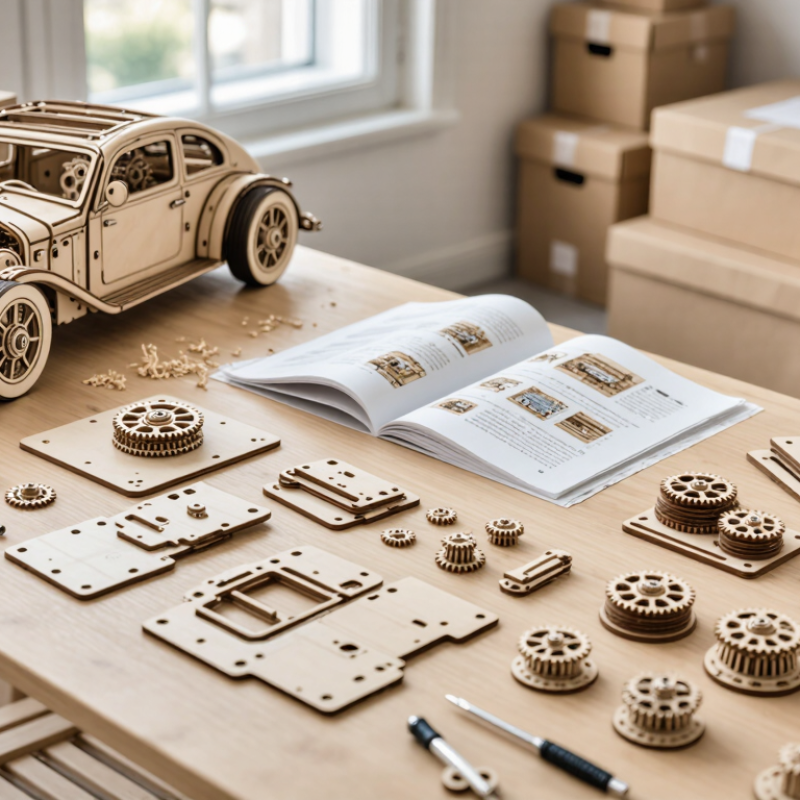
Maria Montessori, a major education expert, wrote, “The hands are the instruments of man’s intelligence.” Her observation explains why these kits attract families, educators, and adult makers. A well-designed model places tiny wooden panels, gears, axles, and illustrated instructions directly into the learner’s hands. The experience should feel challenging, not frustrating. In practical testing, the strongest kits usually combine accurate cutting, clean edges, durable plywood, and realistic assembly times. Yet even these standards need careful review. Some suppliers publish impressive specifications without showing independent testing. Others provide incomplete English instructions or inconsistent component counts. This guide compares Chinese Wooden Hobby Kit options through product design, material evidence, manufacturing experience, customer feedback, and after-sales support. The “best” choice may not be the cheapest. It may be the kit that still works after the first mistake.
Which Is the Best Wooden Hobby Kit from China?

What Makes a Wooden Hobby Kit the Best Choice?

The best wooden hobby kit is not simply the largest box or the cheapest factory offer. It should create a steady, understandable building experience. Grand View Research estimates the global educational toys market reached about USD 34 billion in 2023. That growth reflects demand for hands-on learning, not decoration alone. A strong kit should develop patience, spatial reasoning, and practical coordination.

Material choice matters. Look for smooth basswood or plywood, clean laser-cut edges, and pieces that fit without force. The wood should feel dry, light, and free from sharp splinters. A reliable kit also includes clear diagrams, numbered parts, and spare connectors. ISO 8124 and EN 71 provide useful safety benchmarks for toy materials and construction. However, compliance claims still need evidence, such as test reports or traceable production records.

I have found that the best kits leave room for small mistakes. Perfectly effortless assembly becomes boring quickly. Still, unclear instructions create frustration, especially around tiny gears, glue points, and fragile tabs. Mordor Intelligence reports continued expansion in the global do-it-yourself hobby market, driven by creative and screen-free activities. That trend is encouraging, but it can also invite rushed product design. Check the age guidance, assembly time, tool requirements, and after-sales parts support. A beautiful wooden model means little if one missing axle stops the whole project.

Which Is the Best Wooden Hobby Kit from China? - What Makes a Wooden Hobby Kit the Best Choice?

The best wooden hobby kit depends on the builder’s age, experience, available time, and preferred type of finished model. The comparison below uses typical specifications found across wooden hobby kits manufactured in China and is intended as a practical buying guide.

Kit Category Typical Age Approx. Pieces Assembly Time Difficulty Typical Material Skill-Building Value Display Value Best Choice For
Mechanical Model 14+ 150–400 6–12 hours Advanced Plywood, wood veneer, metal parts ★★★★★ ★★★★★ Experienced builders who enjoy gears, moving parts, and engineering details.
Wooden Puzzle Box 12+ 80–200 3–8 hours Intermediate Laser-cut plywood, wood veneer ★★★★☆ ★★★★☆ Gift buyers and hobbyists who prefer a compact project with an interactive result.
Miniature House 14+ 100–300 12–30 hours Intermediate to Advanced Plywood, MDF, fabric, paper ★★★★★ ★★★★★ Creative builders who enjoy interior decoration, painting, and detailed customization.
Wooden Ship Model 14+ 120–350 10–25 hours Advanced Basswood, plywood, cotton thread ★★★★★ ★★★★★ Model enthusiasts who value historical appearance, shaping, rigging, and craftsmanship.
Wooden Marble Run 12+ 180–300 4–10 hours Intermediate Plywood, hardwood, glass or steel marbles ★★★★☆ ★★★★☆ Families and hobbyists interested in motion, problem-solving, and hands-on assembly.
Wooden 3D Puzzle 8+ 50–180 1–5 hours Beginner to Intermediate Laser-cut plywood ★★★☆☆ ★★★☆☆ Beginners, children with adult supervision, and people seeking a shorter project.
What makes a wooden hobby kit the best choice? Look for accurately cut parts, clear illustrated instructions, smooth wood surfaces, consistent dimensions, safe materials, suitable difficulty, and replacement-part support. For most first-time builders, a beginner or intermediate kit with 50–180 pieces offers the best balance between enjoyment, completion time, and learning value.

Note: Piece counts, assembly times, age recommendations, and material combinations are typical ranges for comparable wooden hobby kits and may vary by model design and included accessories.

Key Types of Wooden Hobby Kits Made in China

China produces several distinct types of wooden hobby kits, each serving a different building style. Miniature house kits include tiny doors, furniture, stairs, and printed wall panels. They suit patient builders who enjoy interior details. Mechanical wooden models use gears, cams, and moving joints. A finished clock or lifting crane can demonstrate basic engineering without electronic parts. These kits often need careful sanding, because tight gears may stop after assembly.

Wooden puzzles and 3D construction kits are easier to start with. They usually contain laser-cut sheets, numbered pieces, and simple illustrated instructions. Animal figures, architectural models, and decorative vehicles are common options.

Ship and aircraft kits require more accuracy. Thin strips must bend smoothly, while small masts or wings can break under pressure. Educational kits may include bridges, windmills, or solar-inspired mechanisms. Their value depends on clear explanations, not just attractive packaging.

When assessing a Chinese-made kit, I check wood thickness, cutting accuracy, odor, and instruction quality. Birch plywood often feels stable, but warped sheets can create frustrating gaps. I once focused too much on the final appearance and ignored the sanding time. That was a mistake. Good kits label fragile parts and provide a few spare pieces. Still, instructions can occasionally miss a step. Builders should measure before gluing and test moving parts early. A thoughtful kit leaves room for skill, correction, and a little imperfection.

How to Evaluate Materials, Design, and Craftsmanship

Choosing a wooden hobby kit from China requires more than attractive photos. In my evaluations, material quality is the first practical test. Look for basswood, birch plywood, or another clearly identified wood. Vague labels deserve caution. Sheets should feel dry, flat, and evenly cut. I inspect edges for dark scorch marks, loose fibers, and uneven thickness. A sharp wood scent is not proof of quality. It may indicate fresh processing or excessive finishing residue. Ask for moisture-control details and safety documentation when available. Tiny parts matter. Poorly cut tabs can make an enjoyable build frustrating.

Design quality appears in the instructions, not only in the finished model. Good diagrams show part numbers, assembly direction, and glue points. Steps should match a beginner’s working pace. I prefer kits that allow dry fitting before permanent assembly. That feature prevents many mistakes. Check whether moving parts have sensible clearance. A door that cannot open after painting signals weak planning. Scale drawings and a complete parts list improve reliability. However, photos can hide warped panels or missing hardware. Request a sample inspection or an unedited assembly video. I once trusted polished images and regretted it.

Craftsmanship combines precision, consistency, and thoughtful packaging. Parts should be separated, protected, and easy to identify. Laser cuts need clean edges, but slight variation is normal in natural wood. Excessive gaps are not. Compare several units if possible. One sample may flatter the whole batch. Paint, glue, and tools should be clearly described, with age guidance included. My judgment is not flawless. Sanding can solve small issues, while poor design usually cannot.

Comparing Safety, Difficulty, Price, and Educational Value

Which Is the Best Wooden Hobby Kit from China?
Comparing Safety, Difficulty, Price, and Educational Value

Choosing a wooden hobby kit requires more than checking its piece count. Safety should come first. Look for smooth, sanded edges, accurate cuts, and non-toxic glue. A reliable kit should include clear age guidance and simple handling instructions. Small parts can create risks for young children. Adult supervision remains necessary.

Difficulty depends on more than the number of pieces. Interlocking parts, unclear diagrams, and tight joints can frustrate beginners. A practical choice includes numbered components, readable illustrations, and spare pieces. I once underestimated a kit with only 80 parts. The tiny gears took longer than expected. That mistake taught me to inspect the assembly steps before buying.

Price comparisons should include shipping, tools, glue, and possible replacement parts. A cheaper kit may require extra sanding or stronger adhesive. Educational value appears in the building process. Children can practice counting, sequencing, spatial reasoning, and fine motor control. Adults may develop patience and basic mechanical understanding. Kits with moving wheels or simple lifting arms usually offer deeper learning. However, the educational effect depends on guidance. Leaving a child alone with confusing instructions may reduce curiosity. A slightly more expensive kit can be worthwhile if its materials, instructions, and design support independent learning.

Which Is the Best Wooden Hobby Kit from China?

This comparison uses typical market ranges for generic wooden hobby kits. Safety and educational value are scored from 1 to 5, while difficulty is rated from 1 (easy) to 5 (advanced). Prices show approximate retail levels in USD.

How to Choose the Right Chinese Wooden Hobby Kit

Choosing the right Chinese wooden hobby kit starts with your skill level and available time. A beginner may prefer a small house, vehicle, or mechanical model with fewer than 150 pieces. Check the recommended age, assembly time, and required tools before ordering. Tiny parts can turn an enjoyable project into a frustrating evening.

Material quality matters. Look for evenly cut plywood, clean edges, and pieces that separate without tearing. I once bought a kit with beautiful photos but weak wood. Several tabs broke during assembly. That mistake taught me to inspect customer photos, not only product descriptions. A useful kit should include clear diagrams, numbered parts, and practical guidance for glue application. Instructions need patience.

Think about the finished display too. Measure your shelf before choosing a large model. Check whether the design needs paint, sanding, batteries, or extra clamps. Some kits include spare pieces, while others provide none. Ask the seller about missing-part support, packaging protection, and replacement procedures. A sample order can reveal more than polished advertising. Read recent reviews carefully, especially comments about warped boards and confusing steps. Cheap pricing is not always real value. A slightly better-cut kit may save hours of repair and reduce wasted material. Even experienced builders should allow extra time for imperfect fits; handmade-looking results can be part of the charm.

FAQS

What materials should I look for in a wooden hobby kit?

Choose clearly identified basswood, birch plywood, or similar wood. Sheets should feel dry, flat, and evenly cut. Avoid vague material descriptions.

How can I inspect the wood before assembly?

Check edges for dark scorch marks, loose fibers, and uneven thickness. Small tabs should separate cleanly. A strong wood smell proves very little.

What makes assembly instructions reliable?

Good instructions show part numbers, assembly direction, glue points, and readable diagrams. A complete parts list also helps. Dry fitting prevents many mistakes.

How difficult is a kit for beginners?

Difficulty depends on joint tightness, tiny parts, and diagram quality. Piece count alone can mislead. An 80-piece kit may still contain demanding gears.

What safety details should I check?

Look for smooth edges, accurate cuts, non-toxic glue, and clear age guidance. Small parts require adult supervision. Paint, tools, and adhesives should be described clearly.

How should I compare the real price of different kits?

Include shipping, glue, tools, sanding materials, and possible replacement parts. A cheaper kit may require more repair work. Low price is not always good value.

What design features improve the building experience?

Numbered components, sensible moving clearances, spare pieces, and dry-fitting options are useful. A door should still open after painting. That sounds obvious.

How can a kit provide educational value?

Building can develop counting, sequencing, spatial reasoning, patience, and fine motor control. Moving wheels or lifting arms add mechanical learning. Guidance still matters.

What should I inspect before ordering a larger model?

Measure your shelf and check the finished dimensions. Review recent customer photos for warped boards, broken tabs, or missing hardware. Polished images can hide problems.

What should I do when the fit is imperfect?

Light sanding can fix small gaps or tight joints. Poor design usually cannot be repaired easily. My judgment may be wrong, so allow extra time.

Conclusion

Choosing the best Wooden Hobby Kit from China requires more than comparing appearance and price. A high-quality kit should combine durable, responsibly selected wood, accurate parts, clear instructions, and thoughtful design. Chinese manufacturers offer many options, including architectural models, mechanical structures, miniature scenes, vehicles, and creative craft sets. Each type provides a different building experience, so buyers should consider the builder’s age, patience, skill level, and personal interests.

When evaluating a kit, examine the smoothness and precision of the wooden pieces, the quality of the assembly method, and whether the design encourages creativity and problem-solving. Safety is also essential, especially for children, so look for non-toxic materials, secure components, and age-appropriate difficulty. Price should be considered alongside durability, educational value, and the amount of meaningful building time provided. The right Chinese Wooden Hobby Kit is one that balances craftsmanship, safety, challenge, and enjoyment while offering a rewarding hands-on learning experience.


Charlotte

Charlotte

Charlotte is a seasoned marketing professional with a deep understanding of the company's portfolio and a passion for elevating its presence in the market. With a keen eye for detail and a commitment to excellence, she ensures that our professional blog is regularly updated with insightful articles......